Complex Stage Engineering Management: Delivering High-Stakes Live Experiences
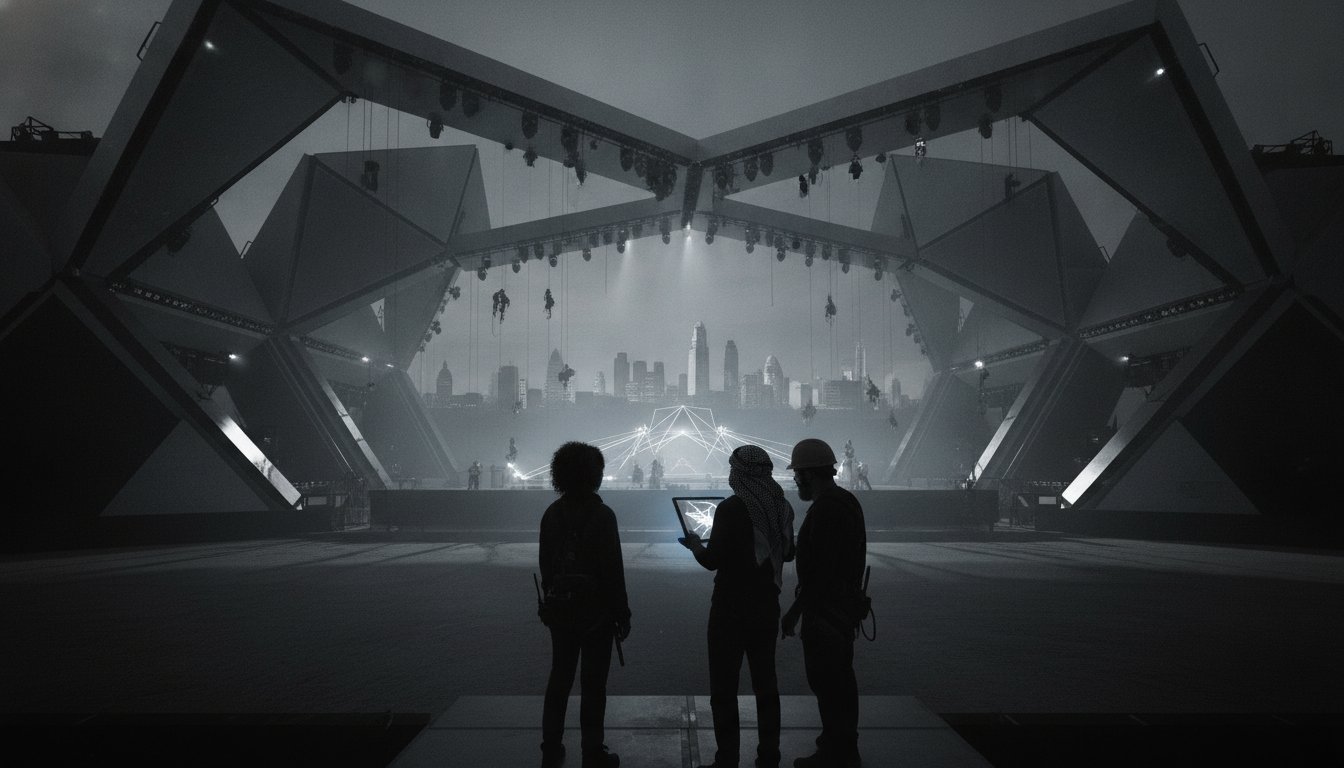
A creative vision that defies gravity is not a design flaw; it is a structural challenge that demands absolute technical composure. You understand the friction of translating an ambitious concept into a physical reality, especially when coordinating multi-national crews across different regulatory zones. Between the rigorous ANSI E1.21-2024 standards for temporary structures and the logistical weight of a 50-foot mobile stage, the margin for error is non-existent. Mastering complex stage engineering management is the only way to bridge the gap between high-concept artistry and safe, tangible execution.
We recognise that budget overruns and technical friction often stem from a lack of alignment between the drawing board and the build site. This professional guide offers a blueprint for synchronising your technical production and creative direction. You will learn how to streamline communication between stakeholders whilst maintaining compliance with the latest global safety protocols. By the end of this article, you will have the clarity needed to deliver world-class live experiences that are as structurally sound as they are visually spectacular.
Key Takeaways
• Define the role of complex stage engineering management in integrating mechanical and structural oversight for high-profile productions.
• Evaluate how to balance mechanical automation with structural integrity to ensure temporary builds withstand extreme environmental factors.
• Apply the 'Yes, And' methodology to translate ambitious creative concepts into feasible, safe engineering solutions.
• Navigate cross-border regulatory compliance, aligning international projects with UK HSE, US OSHA, and Middle Eastern safety standards.
• Implement communication strategies that bridge the gap between technical and creative teams to ensure flawless, high-stakes execution.
What is Complex Stage Engineering Management in Live Production?
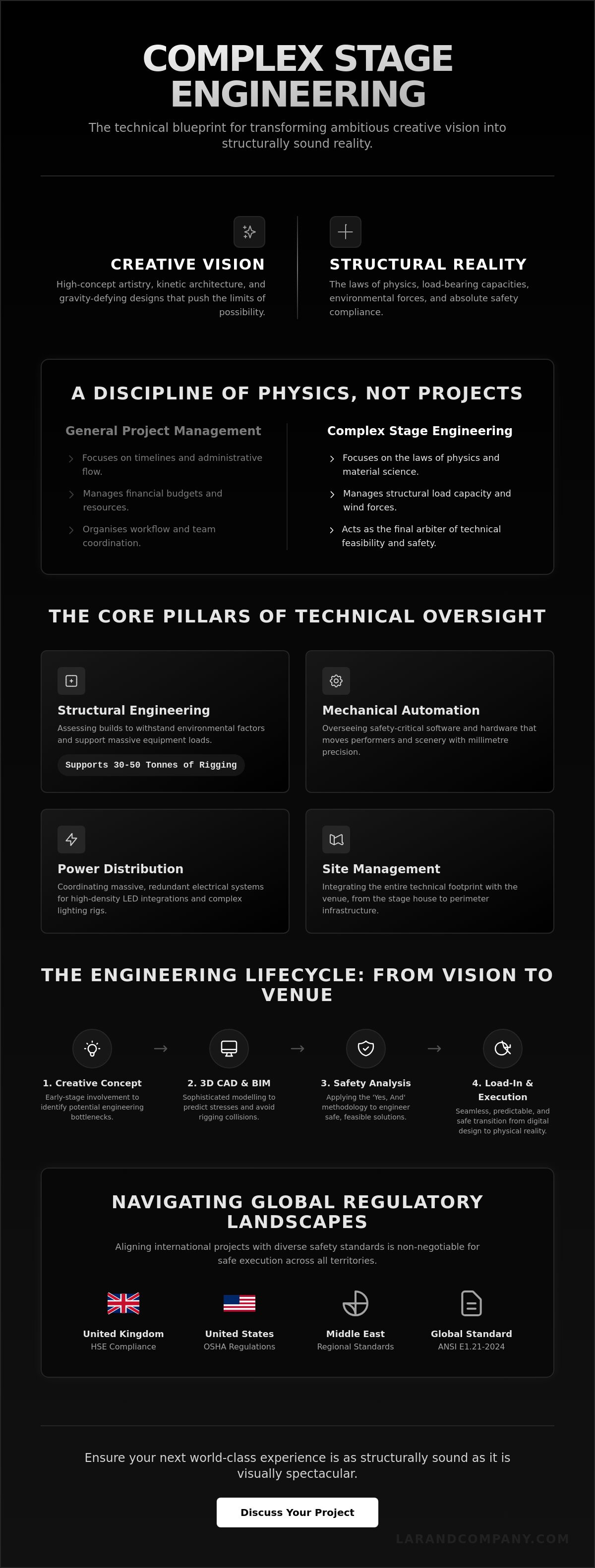
Complex stage engineering management is the strategic oversight of mechanical, structural, and electrical systems within the live entertainment sector. It's the technical bridge between a creative dream and a safe, physical reality. Whilst general project management focuses on timelines and administrative flow, this discipline focuses on the laws of physics. It requires a deep understanding of how materials behave under stress, especially in the temporary environments of a world-class tour or cultural festival.
The distinction between general management and specialised technical direction is significant. A Technical Director or engineering manager doesn't just track a budget; they oversee the load-bearing capacity of a stadium roof or the wind-load calculations for a 50-foot outdoor stage. They serve as the final arbiter of technical feasibility. If a design can't be executed safely, the manager finds the engineering solution that makes it possible. This role is about execution and results in high-pressure, high-stakes scenarios where there's no room for technical unforeseen circumstances.
By 2026, the definition of complexity has evolved. We aren't just building stages; we're deploying kinetic architecture. Modern productions involve high-speed automation, massive LED integrations, and performers suspended from complex rigging systems. These elements often weigh dozens of tonnes and must move with millimetre precision. Managing complex stage engineering management in this environment means harmonising these sophisticated technologies whilst adhering to the latest safety standards, such as ANSI E1.21-2024 for outdoor structures.
The Intersection of Art and Structural Integrity
Aesthetic requirements often push the boundaries of what's physically possible. You must manage the weight-budget with the same rigour as the financial budget. If a venue's infrastructure can only support a specific load, the engineering team must innovate to keep the creative vision intact without compromising safety. Stage engineering is the management of temporary high-risk environments where human safety and structural stability are paramount. We ensure that even the most daring concepts remain grounded in sound structural principles.
From Concept to Load-In: The Engineering Lifecycle
Success starts long before the first truck arrives at the venue. Early-stage involvement in the creative process is vital to identify potential engineering bottlenecks. We move from initial 2D renders to sophisticated 3D CAD and BIM models to predict stresses and avoid collisions in the rigging plot. This meticulous planning reflects the 20-year expertise we bring to global projects. It ensures the transition from digital design to physical load-in is seamless, predictable, and entirely safe for both artists and the audience.
The Core Pillars of Technical Direction and Oversight
Precision in the live environment is never accidental. It is the result of four core pillars that define technical direction. Structural engineering sits at the forefront. Every temporary venue build must be assessed for its ability to withstand environmental factors. We focus on structural safety and regulatory codes to ensure that wind loads and seismic activity are accounted for in the initial design. Modern mobile stages often support between 30 and 50 tonnes of rigging equipment; these figures are the baseline for safety in complex stage engineering management.
Mechanical automation follows. We oversee the sophisticated software and hardware that moves performers and scenery with absolute synchronicity. This isn't just about movement; it's about the safety-critical logic that governs every motor and winch. Power distribution is equally vital. We coordinate the massive electrical requirements of modern shows, ensuring that high-density LED integrations and complex lighting rigs have stable, redundant power across every global territory.
Site management provides the physical framework. We oversee the entire footprint, from the stage house to the perimeter infrastructure. This ensures that the technical production integrates perfectly with the venue. It requires a calm, methodical approach to logistics that keeps the project on schedule whilst maintaining a safe environment for everyone involved.
Managing Bespoke Fabrication and Special Effects
Bespoke elements define world-class experiences. We source elite talent for unique engineering challenges that require custom solutions. This involves rigorous testing and pre-visualisation in a controlled environment. By resolving technical hurdles before the load-in, we ensure a consistent result across multiple international dates. This reliability is why we are trusted with the most significant cultural and commercial events.
Financial Oversight of Multi-Million Pound Technical Budgets
Effective complex stage engineering management also requires technical excellence to be matched by financial discipline. We provide transparent procurement for all technical hardware and crew. Our focus is on mitigating the technical unforeseen circumstances that lead to budget overruns. We identify potential hidden costs during the design phase, particularly those related to engineering changes during rehearsals. This financial discipline ensures that the creative vision remains achievable. You can explore our approach to technical production to see these pillars in action.
Translating Creative Vision into Structural Reality
The friction between creative ambition and physical laws is where the most significant value of complex stage engineering management is realised. We adopt a "Yes, And" approach. This philosophy ensures that we don't dismiss seemingly impossible concepts; instead, we find the precise engineering path that makes them viable. It requires a technical director to act as the primary liaison between the Creative Producer and the engineering crew. This role demands more than practical skill. It requires the formal training in technical direction necessary to oversee technical design and multi-disciplinary engineering whilst maintaining the integrity of the artistic vision.
Managing stakeholder expectations is a delicate balance. When the laws of physics dictate a change in design, the manager must present alternatives that preserve the artistic intent. This requires meticulous attention to detail during the pre-production phase. Every load point and every automated move must be scrutinised. Clear communication ensures that the creative team understands the structural constraints whilst the technical team remains inspired by the vision. We focus on the tangible, reliable execution of logistics to ensure that the transition from render to reality is flawless.
The Role of CAD and Pre-Visualisation
Digital twin technology allows us to identify structural clashes before a single bolt is turned. We use sophisticated CAD and BIM software to simulate the entire build. Virtual rehearsals are particularly valuable for complex automated stage movements. They allow us to test timing and safety protocols without the risk of physical failure. This level of preparation is a hallmark of Technical Production for Live Events, where the architecture of the experience is built digitally first.
Engineering Problem Solving in the Field
Stadium tours and bespoke celebrations present unique challenges, from uneven terrain to extreme weather. Managing these environments requires absolute composure. If a technical failure occurs on site, the engineering manager must lead the recovery with a calm, analytical mindset. Our history of global execution, visible on our Work page, demonstrates this ability to handle high-stakes technical hurdles with unflappable professionalism. Success is measured by the audience never knowing a challenge existed.
Global Logistics and Cross-Border Regulatory Management
Operating at the highest tier of entertainment requires a cosmopolitan understanding of international safety protocols. Navigating the differences between UK HSE, US OSHA, and UAE safety standards is a core competency of complex stage engineering management. Whilst the industry is moving toward a harmonisation of standards, such as the alignment of ANSI E1.21-2024 with international building codes, regional nuances remain. A technical build that passes inspection in London must be adapted with absolute composure to meet the specific seismic or wind-load requirements of Los Angeles or Dubai.
The logistics of moving massive stage engineering kits across global entertainment hubs are immense. We manage the transport of systems capable of supporting up to 50 tonnes of rigging equipment across borders. This involves coordinating with multi-national technical crews and ensuring world-class standards are maintained amongst diverse teams. Whether constructing temporary venues in historic European city centres or remote desert locations, the focus remains on tangible, reliable execution. We handle these transitions with the quiet power required to keep a global tour on schedule.
Managing local crews requires a blend of diplomacy and technical authority. We ensure that every member of the team, regardless of their location, adheres to the rigorous standards set during the pre-production phase. This consistency is vital for the safety of the performers and the integrity of the production. By standardising our approach to technical direction, we eliminate the variability that often leads to logistical friction in international markets.
Risk Mitigation and Health and Safety
We create robust site management plans that prioritise life safety without stifling the creative show. This includes comprehensive crisis management and contingency planning for all technical systems. Our approach ensures that technical unforeseen circumstances don't compromise the event or the budget. For a deeper look at these complexities, see our guide on Large Scale Event Management.
International Site Management and Infrastructure
We coordinate directly with local authorities and venue owners in major hubs like London, Los Angeles, and the Middle East. Success depends on meticulous attention to detail in the "unseen" infrastructure, including ground works, cabling, and drainage. Global tour producers must standardise engineering safety across every tour stop to ensure consistent protection for the audience and performers alike. If you're planning a high-stakes international project, contact our team to discuss your technical production requirements.
Why Lar&Co is the Definitive Partner for Complex Engineering
Lar&Co relies on the gravity of its portfolio to establish credibility. We don't rely on overt promotion; we let our history of global stadium tours and cultural events speak for itself. Delivering complex stage engineering management requires a temperament that remains calm under the pressure of high-value international projects. Our reputation is built on the tangible, reliable execution of the most ambitious creative visions. We provide the understated authority needed to lead multi-national technical crews toward a common goal of excellence.
Our cosmopolitan team operates from key entertainment hubs in London and Los Angeles. This geographic presence provides a shorthand for global dominance and industry connectivity. We understand the nuances of different markets, from the rigid safety regulations of the UK to the logistical scale of North American tours. This international sophistication allows us to act as a seasoned partner for high-level stakeholders who require absolute composure in their technical direction.
Fiscal integrity is as vital as structural integrity. We manage multi-million pound budgets with meticulous transparency. We recognise that technical unforeseen circumstances can derail a project's financial health. By applying rigorous oversight to procurement and crew management, we ensure that every pound spent contributes to a flawless technical execution. Our focus is on results, mirroring the fast-paced, deadline-driven nature of the live entertainment industry.
Meticulous Attention to Detail as a Standard
Our "quiet power" approach ensures the focus remains exactly where it should: on the artist and the audience experience. We bring 20 years of expertise to every project, providing a foundation of knowledge that few can match. This legacy allows us to anticipate challenges before they manifest on site. You can contact Lar&Co to discuss your project's technical requirements and see how our seasoned perspective can elevate your next production.
A Global Elite Practice
Lar&Co occupies a unique position as a cultural bridge. We are equally comfortable managing the refined technical needs of high-end fashion houses as we are the massive structural requirements of a stadium build. We serve as the essential link between creative ambition and technical reality, ensuring that neither is compromised. For those operating at the highest levels of entertainment, our stadium tour management services offer the definitive solution for delivering excellence at scale.
Executing the Impossible with Absolute Composure
Delivering a world-class production requires a seamless blend of structural integrity and artistic ambition. You've seen how aligning with global safety standards and managing cross-border logistics prevents technical friction. Meticulous pre-visualisation and a disciplined approach to creative challenges are the foundations of successful complex stage engineering management. These elements ensure that the most daring designs remain safe, feasible, and entirely spectacular.
Lar&Co operates as the quiet power behind the scenes, bringing 20 years of international expertise to the most significant cultural events. With offices in London and Los Angeles, our cosmopolitan team manages multi-million pound budgets with absolute fiscal integrity. We let our portfolio of stadium tours and bespoke celebrations define our capability. Partner with Lar&Co for your next high-profile production to ensure your creative vision is met with tangible, reliable execution. We look forward to bringing your most ambitious concepts to life.
Frequently Asked Questions
What is the difference between production management and stage engineering management?
Production management focuses on the overall administrative and logistical flow of an event. Conversely, complex stage engineering management is specifically concerned with the mechanical, structural, and electrical feasibility of the production. It requires a sophisticated understanding of load-bearing capacities and kinetic systems. Whilst production managers oversee the schedule, engineering managers ensure the physical build can safely support the creative vision.
How do you manage the structural safety of a temporary stage build in high-wind areas?
We ensure structural safety by adhering to the latest ANSI E1.21-2024 standards for temporary outdoor structures. This involves conducting rigorous wind-load calculations during the design phase and implementing real-time anemometer monitoring on site. Ballast requirements and guy-wire placements are calculated based on the specific surface area of LED screens and scenic elements to maintain stability in adverse weather conditions.
Can you coordinate complex stage automation across international tour dates?
Coordinating automation globally requires a standardised technical kit and a consistent team of operators across all dates. We manage the logistics of moving sophisticated winch and motor systems between continents whilst ensuring software protocols remain uniform. This approach eliminates the risks associated with varying local equipment. It maintains the precision required for high-stakes performances where millimetre-perfect movement is essential for performer safety.
How do you ensure a multi-million pound technical budget stays on track?
Fiscal integrity is maintained through transparent procurement and early-stage technical audits. We identify potential hidden costs, such as additional rigging points or custom power distribution, before the project moves to the build phase. This proactive approach prevents budget overruns caused by technical unforeseen circumstances during rehearsals. We provide clear financial reporting to ensure the technical production remains within the agreed multi-million pound parameters.
What role does a technical director play in the creative design process?
The technical director acts as the essential bridge between the creative producer's ambition and the engineering crew's reality. They provide critical input on materials and mechanics during the initial design phase to ensure the concept is buildable. This early involvement allows the creative team to push boundaries whilst staying grounded in physics. It ensures the design enhances the show without compromising safety or budget.
How do you manage different safety regulations when touring between the UK and the UAE?
We manage regional differences by aligning every project with the most stringent global standards whilst respecting local mandates. Whilst the UK follows HSE guidelines, the UAE has specific requirements for extreme heat and sand-load factors. Our team adapts the site management plan to ensure compliance across every territory. This ensures a consistent safety culture regardless of the geographic location of the event.
Why is pre-visualisation critical for complex stage engineering?
Pre-visualisation allows us to build the entire production in a digital environment before physical construction begins. This process identifies structural clashes and tests complex automation sequences in a virtual space. It's an essential part of complex stage engineering management that reduces on-site troubleshooting. By resolving technical hurdles digitally, we ensure a faster, safer, and more predictable load-in process at the venue.
What happens if a creative vision is physically impossible to build?
If a concept defies the laws of physics, we apply a 'Yes, And' methodology to find a viable alternative. We don't discard the vision; we seek different engineering paths, such as lighter composite materials or alternative rigging methods, to achieve the same aesthetic result. The goal is to preserve the artist's intent whilst ensuring a safe and structurally sound environment for the audience and performers.