Creative Direction for Events in Dubai: From Vision to Live Impact
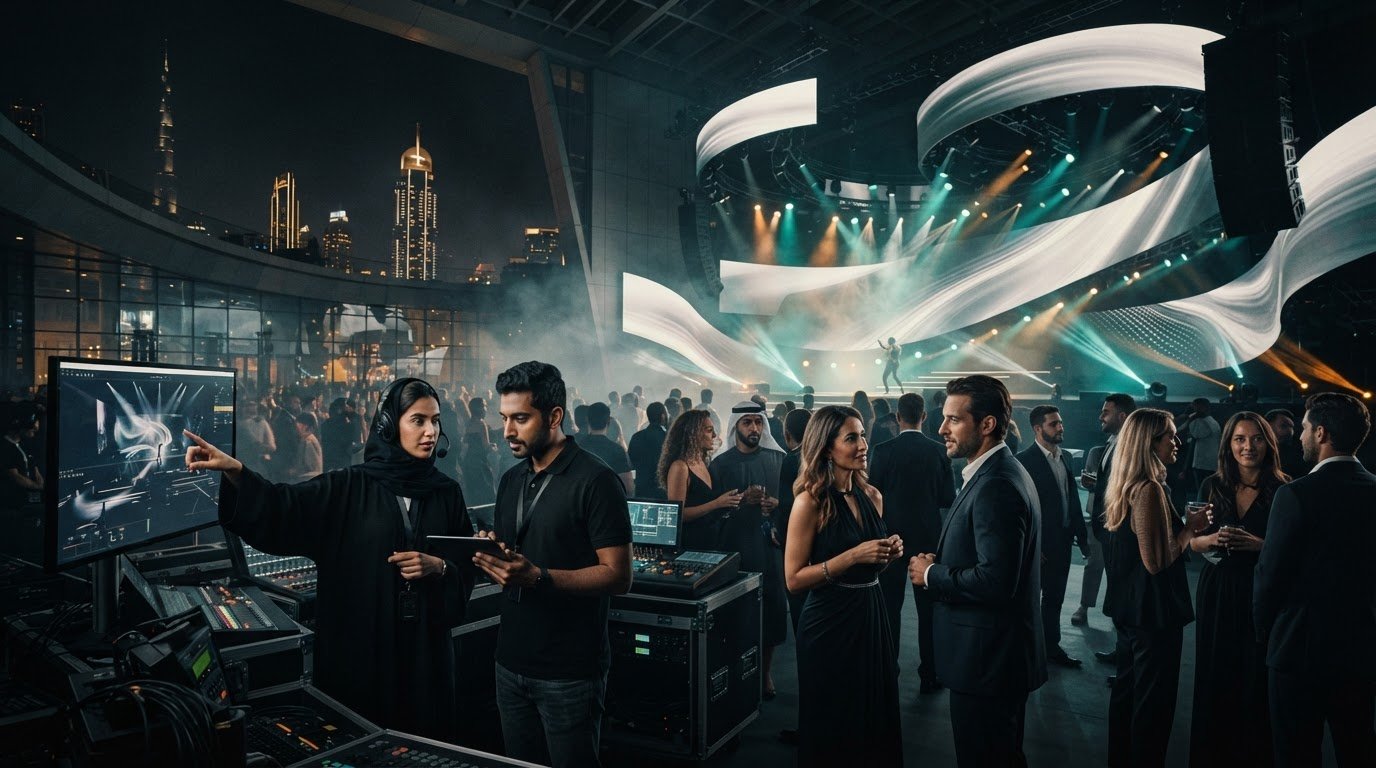
A compelling event concept can still fall flat if it doesn’t connect with the venue, the audience or the reason for bringing people together. The challenge behind creative direction for events Dubai is turning an ambitious idea into an experience that feels distinctive, considered and achievable in a live setting.
It’s natural to wonder where creative direction ends and production begins. The strongest results come when they work together. Creative direction establishes the purpose, narrative and intended experience. Production translates that vision into decisions about space, staging, technology, schedules and delivery. Neither should sit apart from the other.
This article explains how to turn an event brief into a clear creative vision that holds together from the first impression to the final moment. You’ll learn how to align the concept with its audience and setting, make cultural context part of the thinking, and connect creative ambition to practical production. Lar&Co brings more than 20 years of live entertainment experience together with creative direction, show production, technical production and site management, helping ideas move from vision to live impact.
Key Takeaways
• Set a clear event purpose and identify the audience before shaping the creative concept.
• Use the specific venue and cultural context to guide creative choices, rather than relying on assumptions about local audiences.
• Assess creative direction by how well it connects the event’s purpose, audience experience and production planning.
• Prepare a focused brief with objectives, format, stakeholders and decision timelines to support creative direction for events Dubai.
• Lar&Co connects creative thinking with show production, technical production and site management for live events.
What creative direction for events in Dubai needs to achieve
Event creative direction is the organising vision that connects an event’s purpose to the experience people encounter, guiding the creative choices that bring it to life. It gives the event a point of view. That point of view should shape more than the room’s appearance: it can inform the programme, stage, content, transitions and the way guests move through the experience.
For an event in Dubai, the brief needs to reflect its specific setting and intended audience. The city brings together different industries, communities and international perspectives, but no single description can capture every audience. Start with who is attending, why they are there, the event format and the character of the venue. These details help the creative team make considered choices without relying on assumptions about local tastes or behaviour.
A coherent idea also does more than provide decoration. A striking entrance, dramatic stage and sequence of visual effects may each be impressive, yet still feel unrelated. Creative direction gives them a shared rationale. It helps distinguish choices that serve the event’s purpose from additions that look attractive but don’t strengthen the experience. The Role of a Creative Director offers wider context on how creative leadership establishes a vision and guides its execution.
How event objectives shape the creative brief
The objective sets the creative direction’s boundaries. A corporate gathering may need to make a strategy clear and give stakeholders a reason to engage. A cultural celebration may place greater emphasis on stories, contributors and context. An entertainment event may be built around performance and pacing. Make the brief more precise by identifying who is present, what they need to experience and what the venue can support.
Hypothetical example: If a company wants to introduce a new sustainability strategy to its staff, the concept could centre on visible progress. The content might follow a journey from current commitments to future goals, while the audience experience makes room for discussion. The creative idea is then tied to the objective, rather than applied as a decorative theme.
What makes a creative direction feel distinctive
Distinctiveness comes from a consistent point of view, not from adding more effects. A memorable premise can connect the atmosphere, spoken and visual content, stage moments and audience journey. Each element has its own role, but all should feel part of the same event.
Test each creative choice by asking what it communicates and how it supports the experience. If a visual moment has no clear relationship to the event’s purpose, it may distract rather than add meaning. For creative direction for events Dubai, relevance comes from responding to the particular brief, audience and setting. Coherence makes that response recognisable throughout the event, without promising a guaranteed reaction.
From event concept to live experience: connecting creative direction and delivery
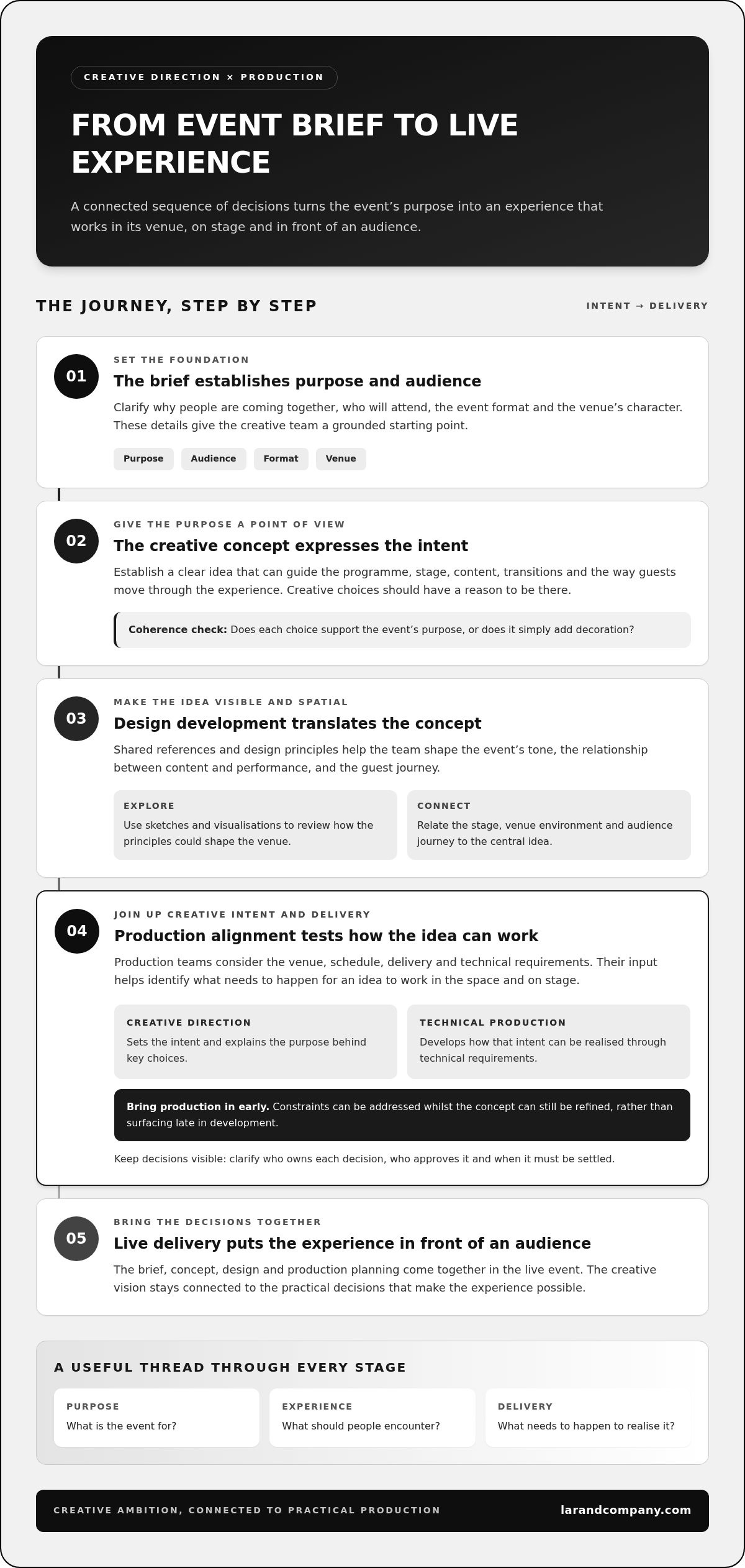
A concept becomes a live experience through a sequence of connected decisions. The brief establishes the purpose and audience. The creative concept gives that purpose a clear expression. Design development makes the idea visible and spatial, then production teams align it with the venue, programme and practical requirements. Live delivery brings these decisions together in front of an audience.
Early production input protects creative ambition by identifying what needs to happen for an idea to work in the space, on stage and within the event schedule. It gives creative and technical teams time to address constraints while the concept can still be refined, rather than discovering late in development that a central moment needs to change.
Developing the concept into a visual and spatial language
The creative direction should give the team a shared set of references and design principles. These might define the event’s tone, the relationship between content and performance, or how guests move from arrival to the main programme. Sketches and visualisations help stakeholders review how those principles could shape the venue before elements are built or installed.
Each decision should relate back to the central idea. Stage design can establish a focal point, the wider venue environment can carry the same visual language, and the audience journey can determine how the experience unfolds. Dubai hosts a varied programme of events, reflected in the official Dubai Events Calendar. That range is a reminder to begin with the specific event, its setting and its audience, not a generic idea of what an event in the city should look like.
Bringing creative and production teams into alignment
Creative direction sets the intent. Technical production develops how that intent can be realised through the event’s technical requirements. The roles are connected, but not interchangeable: creative choices guide the experience, whilst technical specialists assess and develop the means of delivery. Clear communication between the two keeps the design rooted in the show rather than detached from it.
Alignment depends on shared information and visible decisions. The creative lead should explain the purpose behind key choices, while production teams feed back on implications for the venue, schedule and delivery. Stakeholders need to know who owns each decision, who approves it and when it must be settled. Changes can then be assessed against both the concept and their practical effect. This connection between intent and execution is central to technical production for live events.
For creative direction for events Dubai, this joined-up process matters from the first concept discussion through live delivery. Explore Lar&Co’s live event work to see the range of formats supported by its creative and production practice.
How to assess creative direction for a Dubai event
A polished visual presentation is only one part of strong creative direction. Assess the thinking behind it: does it serve the event’s purpose, make sense for its audience and setting, and connect to the work needed to deliver the experience? The framework below helps decision-makers look beyond aesthetics and judge whether the idea is joined up.
| Assessment area | What to look for | Useful test |
|---|---|---|
| Strategic alignment | The concept reflects the event’s stated objective, rather than simply adding a visual theme. | Can the team explain how the idea supports the event’s purpose? |
| Audience relevance | Content, tone and experience respond to the people attending, without assuming one fixed Dubai audience. | Does the brief identify who the audience is and what the event should mean to them? |
| Coherence | Stage, content and guest experience feel connected by a recognisable point of view. | Do the main creative choices feel like parts of the same idea? |
| Production integration | The concept develops alongside venue, schedule and delivery considerations. | Can the team describe how the creative intent will be realised live? |
Creative direction, event design and show production: where they differ
These disciplines contribute at different levels. Creative direction establishes the guiding vision and how the event should express it. Event design shapes visual and spatial elements within that vision, such as the environment and the way people encounter it. Show production coordinates the work required to deliver the live experience. Event planning organises the broader event requirements and process. Their responsibilities can intersect, but a clear brief makes ownership and decision-making easier to understand.
Assess creative direction not only by what appears in a presentation, but by whether the idea gives design and production teams a useful basis for their work. An attractive concept without a clear purpose may be hard to evaluate. An ambitious concept with no connection to delivery may be difficult to realise.
Questions that reveal whether the creative idea is joined up
Use these questions in a concept review. Ask for specific answers grounded in the event, not general claims about what audiences in Dubai want:
• Which stated objective does the concept serve, and how can you see that in the experience?
• How does it respond to the intended audience, event format and venue?
• Does the same creative logic carry through the content, stage and guest journey?
• Which choices depend on the venue or production approach, and how are those being developed?
• Who makes or approves key creative decisions as the work progresses?
The strongest responses connect the idea to the project’s actual conditions. In creative direction for events Dubai, context should come from the particular audience, venue and purpose in the brief, not a formula applied to every event in the city. A clear rationale makes it easier to judge whether the direction is distinctive, coherent and ready to move towards delivery.
A practical creative-direction process for Dubai event briefs
A useful brief gives the creative team enough clarity to develop a meaningful idea, while leaving room to find the right expression for the event. It also gives production teams the information they need to assess the idea as it takes shape. For creative direction for events Dubai, the city is context, not a preset formula: the relevant details come from the event’s purpose, audience, venue and stakeholders.
What to include in a Dubai event creative brief
Start with a concise account of what the event needs to achieve and what attendees should experience. Then record the facts and decisions that will influence the creative work. A focused brief can include:
Objectives
the business, cultural or entertainment purpose, and what a successful experience should communicate.
Audience and format
who is expected, how they will take part, and whether the event is a conference, celebration, performance or another format.
Venue information
the confirmed location, available plans or reference material, and known spatial considerations.
Programme requirements
key content, speakers or performance moments, and the sequence or structure already established.
Stakeholders
the people contributing to the work, who owns decisions, and who must approve creative developments.
Context and timing
event-specific cultural considerations, decision dates and milestones for reviews.
Be precise about cultural context. If the event brings together particular communities, partners or international guests, describe the relevant considerations based on the brief. Avoid broad assumptions about what an audience in Dubai will value. Known information helps the team make thoughtful choices; open questions can be identified for discussion rather than treated as facts.
How to keep creative decisions moving
Once the brief is agreed, develop the creative premise in stages. First establish its central thought and the experience it should support. Then use visual references, sketches or other concept materials to make the direction easier to discuss. Review these against the brief before developing them further.
Set decision owners and review points early. Stakeholders should know which choices they are being asked to make, what information they need and when their approval is due. After each review, record what has been agreed, what remains open and who is responsible for the next step. This prevents settled principles from being reopened without a clear reason.
As the concept develops, align it with production considerations. Venue conditions, programme changes and operational needs can shape how the idea is realised, so bring those perspectives into the process before decisions become difficult to adjust. For projects with more complex delivery demands, the principles explored in large-scale event management can help connect creative development with the wider production picture.
Lar&Co brings creative direction together with show production, technical production and site management. A clear brief gives that work a practical starting point and keeps the creative intention connected to live delivery.
Lar&Co Dubai Events: Vision Connected to Execution
A strong creative idea needs more than a compelling visual expression. It needs a clear route from the original ambition to the experience delivered on site. Lar&Co is an international show-production practice that brings creative direction together with show production, technical production and site management. This connection keeps the creative vision in view as the work moves towards delivery.
For organisations developing an event in Dubai, that joined-up perspective matters. The setting and audience inform the creative approach, while production considerations help shape how the idea takes form. Lar&Co works internationally, including in the United Arab Emirates, and brings experience across complex live entertainment projects without relying on a one-size-fits-all formula. Its international work also spans the UK, USA, Saudi Arabia and Qatar.
An international practice for high-profile live experiences
With more than 20 years of experience in live entertainment, Lar&Co works across concert tours, festivals, cultural celebrations and corporate events. These formats call for different creative responses, audiences and production needs. An idea suited to a performance-led show may not serve a corporate gathering; the direction must answer the brief in front of it.
With offices in London and Los Angeles, Lar&Co operates as an international practice. Its range of live work offers a view of the different event formats the practice supports. Each project begins with its own purpose and conditions.
Turning a distinctive idea into a coordinated show
Creative direction gives collaborators a shared point of view. It can guide the atmosphere, the relationship between content and performance, and the way the audience encounters the event. Show production, technical production and site management connect that intent to the practical work of delivering a live experience. Together, they help teams consider how creative decisions relate to the programme, venue and on-site activity.
Creative direction does not replace technical or operational expertise. It gives those teams a clear sense of what the experience is meant to achieve, while their input helps develop an approach that can be delivered. The result is a creative vision that informs the show as a whole, rather than a standalone visual concept.
For creative direction for events Dubai, the right approach starts with the particular brief, not assumptions about what every event in the city should be. Lar&Co’s international experience and connected production capabilities provide a basis for developing that approach with care. To discuss how creative direction and live delivery could serve your Dubai event, share your event brief with Lar&Co.
Set a clear direction for your next event
Start by defining what you want people to take away. Should they understand a new idea, feel part of a shared occasion or be energised by a live performance? A clear intention gives creative decisions a practical test and helps keep the experience focused as plans develop.
For creative direction for events Dubai, make the brief specific to the event rather than relying on a familiar visual formula. Identify what must be communicated, what the audience should experience and which aspects of the setting matter to the concept. That clarity creates room for distinctive thinking while giving collaborators a shared point of reference.
Bring those priorities into an early conversation about your event. A strong starting point can turn a broad ambition into a direction that is meaningful to your audience and ready to develop. Discuss your Dubai event vision with Lar&Co, and take the first step towards an experience with purpose and presence.
Frequently Asked Questions
Is creative direction the same as event design?
No. Creative direction establishes the thinking behind the experience, whilst event design gives parts of that thinking a visual and spatial form. For example, if a conference aims to encourage exchange, the creative direction might shape how ideas are introduced and connected. Event design then considers how the room and visual elements support those moments. The two disciplines work closely, but they answer different questions.
Can creative direction support both corporate and cultural events in Dubai?
Yes. The approach can serve different event purposes by responding to the specific people, programme and context involved. A corporate event may need to make a business message clear; a cultural event may centre on a particular story or contribution. For a programme involving stakeholders in the UK, USA, UAE, Saudi Arabia or Qatar, the brief can clarify how perspectives and expectations should be brought together.
How early should creative direction begin for an event?
Bring it in as soon as the event’s purpose and broad format are being shaped. That gives the concept room to influence choices before the programme, venue arrangements or visual approach become difficult to change. If direction begins after major decisions are fixed, the creative team may have fewer ways to connect the experience. Early involvement doesn’t require every detail to be settled; it gives the first decisions a shared rationale.
What should a creative direction brief include?
Alongside essential event details, include what the audience should understand, feel or do, and how you’ll judge whether the experience served its purpose. Note any established brand guidelines, required messages, programme constraints and creative references, distinguishing firm requirements from preferences. If stakeholders disagree about tone or priorities, record the open questions. That gives the team a useful starting point and helps prevent different expectations from surfacing late in development.
Can a creative concept be ambitious and still practical to deliver?
Yes, provided ambition is translated into clear priorities. For instance, a concept built around transformation might rely on a carefully timed change in the programme, rather than making every part of the venue transform. Early discussion with production teams helps identify which moments carry the idea and what conditions they depend on. If one element changes, the central premise can remain intact instead of the whole concept losing its meaning.
How can you tell whether an event’s creative direction is working?
Look for evidence that the intended experience is coming through, not simply whether the visuals look polished. During a review, compare key moments with the event’s purpose: does the opening establish the right tone, do transitions feel connected, and can attendees follow the main message? After the event, gather structured feedback from stakeholders and attendees. Use it to identify which choices supported the experience and what should inform the next brief.