Live Event Health & Safety: High-Profile Risk Management
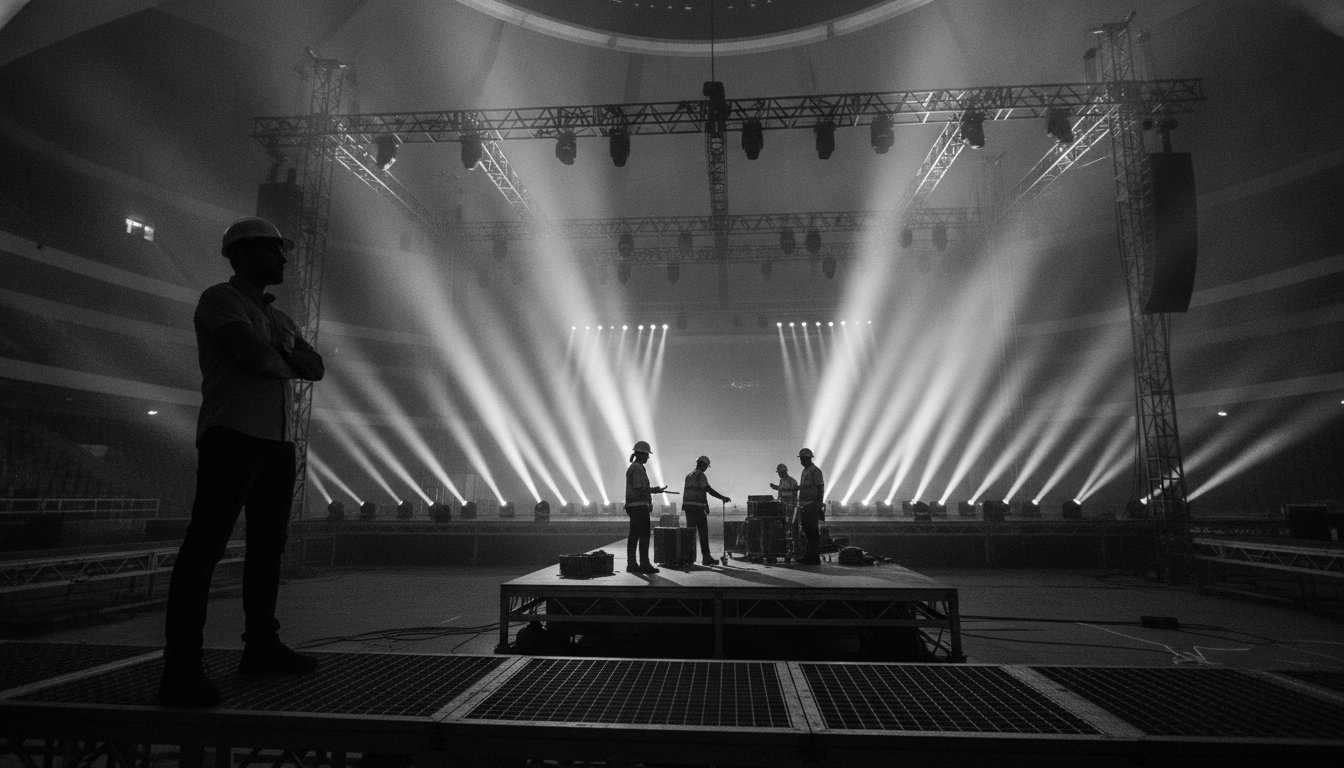
Managing health and safety for live events shouldn't be a hurdle to your creative vision; it should be the foundation of it. In high-profile global production, the most daring spectacles are built on the most rigid safety frameworks. When you're managing tours across London and Los Angeles, the margin for error doesn't exist. You understand the friction of aligning complex stage automation with conflicting international codes. It's a high-stakes environment where the safety of your crew and audience is the only true measure of success.
This article provides the strategies required to master global risk management with absolute composure. You'll learn how to integrate technical production with the latest 2026 standards, including the California OSHA 10-hour entertainment safety training mandate and digital risk assessments. We'll outline a clear framework for achieving a flawless safety record whilst maintaining the seamless execution of your vision. From AI-driven crowd management to the inclusion of mental health first aiders, we cover the essential components of modern, high-tier production.
Key Takeaways
• Define the modern standard for health and safety for live events as a sophisticated fusion of structural engineering, crowd science, and occupational health.
• Guarantee structural integrity for complex stages through rigorous engineering sign-offs and adherence to international TDS standards.
• Manage global compliance by contrasting UK and USA regulatory frameworks with the specific safety expectations of high-profile events in the Middle East.
• Maintain operational control amongst large-scale crews through a disciplined chain of command and communication protocols designed for high-capacity crowds.
• Integrate safety into the earliest stages of creative consultancy to enable ambitious production designs without compromising on-site security.
What Constitutes Health and Safety for Live Events in 2026?
Health and safety for live events is the disciplined intersection of structural engineering, crowd science, and occupational health. It isn't a secondary consideration; it's the structural architecture of the event itself. In 2026, the sheer scale of global entertainment demands a culture where safety precedes creative execution. High-profile productions rely on this unshakeable foundation to protect their reputation and their people. Precision is mandatory. Every cable, stage deck, and barrier must be accounted for within a comprehensive risk framework.
A successful safety strategy requires a clear chain of responsibility. Producers, technical directors, and site managers form the core stakeholder group. These professionals operate within a global framework for health and safety, ensuring that every logistical move is calculated. We categorise risk into three distinct areas: attendee safety, performer security, and the occupational health of the crew. Each requires a bespoke approach but shares a common goal of zero-incident delivery. Managing these disparate needs is what defines an elite production team.
The Evolving Landscape of Live Entertainment Risk
Audience capacities are expanding. Stage automation is growing more intricate. These factors heighten the risk profile of every international project. Proactive risk mitigation has replaced reactive incident management as the industry standard. We prioritise the elimination of hazards during the design phase rather than managing them during the load-in. This philosophy is a fundamental part of technical production for live events, where engineering precision and safety are one and the same. Modern shows often involve kinetic sculptures or heavy overhead tracking systems. These elements require constant monitoring and fail-safe mechanisms that are integrated from the first CAD drawing.
The Producer’s Responsibility in Safety Oversight
The producer establishes the project’s safety temperament. Their oversight ensures that safety protocols are never sacrificed for speed or budget. This commitment is reflected in project-based production management fees, which treat safety as a primary service rather than an overhead. Producers must foster a culture where any crew member feels empowered to stop a show if they identify a critical failure. In 2026, duty of care is the non-negotiable legal and moral mandate to ensure that every individual on-site returns home in the same condition they arrived. It's a standard that applies equally to a small VIP activation or a stadium tour.
Technical Site Management and Structural Integrity
Technical site management transforms a creative concept into a physical reality. For high-profile productions, this process revolves around the structural integrity of Temporary Demountable Structures (TDS). These builds require more than basic assembly; they demand rigorous engineering standards. Whether it's a stadium stage or a bespoke VIP pavilion, every component must be verified for its specific load-bearing capacity. Precision in these early stages prevents the structural failures that can jeopardise an entire tour.
Structural engineering sign-offs are a non-negotiable requirement for any complex build. These documents provide the legal and technical assurance that a design can withstand the dynamic forces of a live performance. Technical direction plays a central role here, overseeing the integration of high-voltage power systems and sophisticated stage automation. Managing these high-stakes variables is a core component of health and safety for live events. It ensures that the technical infrastructure behind the scenes never compromises the safety of the performers or the audience. This is particularly vital in unconventional locations, such as remote desert sites or historic city centres, where ground stability and access logistics present unique hazards that must be mitigated long before the first truck arrives.
Engineering Safety into Stage Design
Ambitious designs often push the boundaries of what is physically possible. Success lies in balancing this vision with rigid load-bearing limits. This synergy is central to creative direction for live shows. For outdoor environments, wind-loading calculations are essential. We implement real-time weather monitoring to manage the risks of climate volatility. This data-driven approach allows for decisive action, such as lowering high-mast lighting or securing stage skins before wind speeds reach critical thresholds.
Site Management and Infrastructure Logistics
Site management is the discipline of controlling a high-momentum environment. It involves the safe movement of heavy plant equipment and the meticulous organisation of technical infrastructure amongst active crews. Electrical safety is managed through exhaustive PAT testing and distribution oversight to prevent failure during peak loads. Adhering to HSE Event Safety Guidance provides a reliable framework for these logistics. Effective site management is the cornerstone of large scale event management, where precision in the back-of-house enables excellence on the stage. If you require expert oversight for your next global project, our team provides the technical production expertise required to manage these risks with absolute composure.
International Compliance: Managing Global Safety Standards
Delivering a world-class production across multiple territories requires more than just logistical skill. It demands a sophisticated approach to international compliance. Managing health and safety for live events on a global scale involves navigating a complex web of regulatory frameworks. In the UK, the Health and Safety Executive (HSE) enforces the Construction (Design and Management) Regulations (CDM), which place heavy emphasis on safety during the design and planning phases. Conversely, the Occupational Safety and Health Administration (OSHA) in the USA focuses primarily on the safety of the individual worker through rigorous training mandates and on-site standards. Bridging these differences is the responsibility of the production team, ensuring that international talent can perform without the friction of regulatory delays.
High-profile events in the UAE, Saudi Arabia, and Qatar present a different set of expectations. These regions often demand the highest tier of technical ambition and luxury. Compliance here involves integrating international best practices with local requirements, particularly regarding heat stress protocols and site-specific logistics. We maintain a consistent safety baseline globally whilst respecting local legal variations. This unshakeable standard allows for seamless execution, regardless of the jurisdiction. Expert production teams act as the essential bridge, translating the expectations of global artists into the reality of local laws without compromising the creative vision.
Navigating the CDM Regulations in the UK
In the UK, the CDM 2015 regulations apply to almost every live event build. The Principal Designer manages risks during the planning phase, whilst the Principal Contractor oversees safety during the build and strike. This structure ensures that safety is designed into the show from the outset. A Construction Phase Plan for a stadium build is a vital document that outlines the specific safety arrangements, site rules, and coordination required to manage the complex construction work of a major event. Adhering to these roles provides a clear framework for accountability amongst all departments.
Global Tour Safety: Consistency Across Borders
Maintaining a flawless record across a multi-territory tour requires a Global Safety Manual. This document ensures that every department follows the same protocols, regardless of the venue. This level of consistency is a hallmark of stadium tour management services. We work closely with organisations like the Event Safety Alliance to stay aligned with the latest global best practices. Managing artist liaison and crew expectations in major hubs like London and Los Angeles requires local safety consultants who understand the specific nuances of each city. This local expertise ensures that high-stakes projects remain on schedule and in full compliance with the highest international standards.

Operational Excellence: Managing Large Event Crews and Crowds
Operational excellence is the invisible force that keeps a high-profile production on track. Managing thousands of crew members across multiple shifts requires a disciplined hierarchy. We implement a clear 'Chain of Command' for rapid, accurate communication. In the high-pressure environment of a stadium build, health and safety for live events relies on this organisational clarity. Every department must understand its specific role within the broader safety framework to prevent the overlap of risks. This structure allows us to manage the tangible execution of complex logistics whilst maintaining absolute composure.
Crowd dynamics are managed through a combination of engineering and behavioural science. We design ingress and egress routes that prevent surges and maintain a steady flow of attendees. In 2026, advanced crowd modelling software and AI-powered CCTV analysis are standard tools for monitoring density in real-time. This data allows site managers to make proactive adjustments to barrier configurations or gate operations. Beyond physical safety, we prioritise crew welfare. Integrating mental health first aiders on-site ensures that the team remains resilient throughout the demanding schedule of a global tour. This holistic approach to safety is what defines a modern, high-tier production culture.
Crew Coordination and Safety Briefings
Effective safety inductions are the first line of defence. We provide high-impact briefings that translate complex technical risks into actionable instructions for international crews. Method Statements and Risk Assessments (RAMS) serve as the daily operational blueprint. We ensure sub-contractor compliance by embedding safety expectations into the initial procurement process. This approach maintains high standards without stifling the creative energy required for world-class show production. It ensures that every individual on-site is aligned with the project's safety temperament from the moment they arrive.
Crisis Management and Contingency Planning
Preparation for the unexpected is a hallmark of elite production. We develop 'Show Stop' protocols that empower designated leads to halt proceedings instantly if a life-safety risk is identified. These protocols are reinforced through tabletop exercises and live simulations during rehearsals. This readiness protects both the audience and the artist's reputation. Maintaining fiscal integrity during a crisis is equally vital. Efficient incident response, guided by production financial management, ensures that resources are allocated effectively without compromising the project’s overall viability. Our team provides the technical direction and site management required to handle these high-stakes scenarios with absolute composure.
The Lar&Co Perspective: Safety as a Creative Enabler
Safety is the invisible power behind the world's most ambitious spectacles. It shouldn't be viewed as a bureaucratic hurdle or a list of restrictions. Instead, we treat it as the structural architecture that allows artists and designers to push creative boundaries with absolute confidence. When the technical foundation is unshakeable, the creative vision can be limitless. This philosophy is central to how we approach health and safety for live events. We don't just manage risk; we enable excellence.
We integrate safety into the earliest stages of creative consultancy and design. By addressing potential hazards during the initial CAD phase, we eliminate the friction that often occurs during on-site execution. Our experience with high-profile cultural celebrations demonstrates this precision. These projects involve complex logistics and vast audiences, where meticulous attention to detail becomes the ultimate safety feature. Every cable path and structural joint is a calculated decision designed to protect both the production and the client's reputation. Composure in the face of complexity is our standard.
Why Elite Productions Require Elite Safety Oversight
Brand reputation is inextricably linked to safety records. For high-profile clients, a single incident can have global consequences. Elite productions require a level of oversight that matches their scale. We leverage world-class talent and over 20 years of expertise to ensure that every project is delivered flawlessly. This commitment to excellence is visible across our global portfolio. You can view our work to see how we balance technical complexity with rigorous safety standards in high-stakes environments. Precision is mandatory.
Partnering for Success
End-to-end production management reduces the friction between creative ambition and regulatory compliance. By managing the entire lifecycle of a project, we ensure that safety protocols are consistent from concept to strike. We invite stakeholders to collaborate on safety from the very beginning. This partnership ensures that the final delivery is not only spectacular but also entirely secure. Managing international projects across London and Los Angeles requires a partner who remains unflappable under pressure. If you are planning a high-stakes project, contact our London or LA offices to discuss how we can support your next global production with the composure and precision it deserves.
Mastering Global Production Standards
Success in high-profile entertainment is defined by the invisible architecture of precision. Mastering health and safety for live events means integrating structural engineering and international compliance into the very first creative sketch. We've explored how technical site management and rigorous crew oversight enable artists to push boundaries whilst protecting the reputation of every stakeholder. In 2026, safety isn't a limitation; it's the framework for flawless execution on the global stage.
With over 20 years of international production expertise and a presence in major entertainment hubs like London and Los Angeles, we provide the meticulous attention to technical and site logistics required for high-stakes projects. Our role is to remain unflappable behind the scenes, ensuring your vision is delivered with absolute composure and structural integrity. You deserve a partner that treats safety as a primary creative enabler.
Secure your next high-profile production with Lar&Co's expert oversight. Let's build something exceptional together.
Frequently Asked Questions
What are the primary health and safety regulations for live events in the UK?
The primary regulations include the Health and Safety at Work etc. Act 1974 and the Construction (Design and Management) Regulations 2015. These laws require organisers to assess risks and provide a safe environment for workers and the public. Adhering to these standards is a fundamental part of health and safety for live events, ensuring every technical build is legally compliant and structurally sound from the outset.
How do you manage crowd safety for stadium-scale concert tours?
Stadium-scale crowd safety is managed through precise ingress and egress modelling and real-time density monitoring. We utilise AI-powered CCTV analysis and strategically placed barrier systems to prevent surges and maintain a steady movement flow. These strategies are supported by a clear communication chain. It allows site managers to make immediate adjustments to gate operations or floor capacities as environmental conditions change on-site.
Who is legally responsible for health and safety at a live event?
Legal responsibility typically rests with the event organiser or the employer in control of the premises. Under CDM 2015, specific duties are also assigned to the Principal Designer and Principal Contractor. These roles ensure accountability is distributed across the production team. This guarantees that every department adheres to the established safety framework throughout the project's lifecycle, from the initial design to the final strike.
What should be included in a live event risk assessment?
A comprehensive risk assessment must include a detailed analysis of structural engineering, electrical distribution, and crowd dynamics. It should identify potential hazards, evaluate the risk level, and outline specific control measures to mitigate them. Meticulous documentation of fire safety, pyrotechnic protocols, and emergency egress plans is essential. This level of detail is required for maintaining a flawless safety record on high-profile international projects.
How does international show production handle varying safety standards between countries?
We handle varying standards by implementing a Global Safety Manual that establishes a high baseline of internal protocols. This manual bridges the gap between different jurisdictions, such as the UK’s HSE and the USA’s OSHA mandates. By working with local safety consultants in major hubs like London and Los Angeles, we ensure every production meets local legal requirements without compromising our universal standard of excellence.
What is a 'Show Stop' protocol and when should it be used?
A 'Show Stop' protocol is a formal, pre-agreed procedure used to halt a performance immediately during a life-safety risk. This might be triggered by structural instability, extreme weather conditions, or a medical emergency within the crowd. It's a critical tool in health and safety for live events. Every department must understand the specific cues and communication lines necessary for a safe and orderly stoppage.
How can technical directors ensure the structural integrity of temporary stages?
Technical directors ensure structural integrity by requiring rigorous engineering sign-offs for all Temporary Demountable Structures (TDS). This involves calculating physical load-bearing limits and wind-loading tolerances for outdoor builds. By overseeing the installation of fail-safe mechanisms and conducting real-time monitoring of weather conditions, they guarantee the stage remains secure. This oversight is vital even under the dynamic performance loads of a stadium-scale show.
Why is CDM 2015 important for the live events industry?
CDM 2015 is vital because it integrates safety into the design and planning phases of a production. It moves the industry away from reactive measures toward a safety-by-design philosophy. By defining clear roles for designers and contractors, it ensures risks are identified and mitigated before the first piece of equipment arrives on-site. This fosters a more disciplined, efficient, and ultimately safer production culture for complex global projects.