Music Festival Production in the Middle East: 2026 Guide

A festival concept can travel. Its production plan needs to be shaped around the market, venue and audience. Successful music festival production in the Middle East starts by building one integrated approach around those specific conditions.
Turning an ambitious idea into a live event takes more than strong creative direction. Creative, technical and site teams need a shared plan, with schedules, budgets and artist requirements aligned from the outset. Local context matters too: audiences, venues and operating conditions differ across the region.
This guide explains what effective music festival production in the Middle East requires, from concept through show day. You’ll learn how to shape an experience for its setting, coordinate delivery decisions and connect creative direction, technical production, site management, financial management and artist liaison. Lar&Co is an independent international show-production practice with more than 20 years of experience in complex live entertainment projects. Its work spans festivals, tours and cultural events, supported by teams in London and Los Angeles.
Key Takeaways
• Shape the brief around the festival’s audience, cultural purpose, scale and intended experience, rather than treating the region as one market.
• Map each stage from feasibility to close, with clear decision rights and information flow to keep teams aligned.
• Choose a visual approach that gives the festival a coherent identity while balancing a shared theme with distinctive stage designs.
• Assess venue conditions, access, audience movement and operational zones early, so site constraints inform the production plan.
• Connect creative direction with technical delivery, site management, financial oversight and artist liaison in music festival production in the Middle East.
Music Festival Production in the Middle East Starts with Local Context
The Middle East is not a single event market. Audiences, venues, stakeholders and the purpose of a festival vary between cities and countries, so an approach that works in one setting may need to change in another. Establish those differences in the brief, before creative and technical decisions begin.
Define who the festival is for, what it aims to express, its intended scale and how guests should experience it. These choices shape the programme, site layout, visual language and guest journey. Production fundamentals, such as clear responsibilities and coordinated schedules, can carry from one project to another. Content, creative references and operational decisions need to suit the local context.
Regional context belongs in the brief, not as a late-stage adjustment. It gives creative and delivery teams a shared basis for decisions instead of leaving them to retrofit the experience after plans are in motion.
How audience and cultural context shape a festival brief
Consider the expectations of local and international audiences together. The programme might bring different musical traditions into conversation, while the guest journey should reflect the event’s purpose and the people it is designed to serve. Cultural references work best as deliberate creative choices, not decorative additions. A useful starting point is understanding the range of Music of the Middle East and deciding which influences genuinely belong in the festival’s identity.
Coverage of a Saudi festival, for example, has described four stages with distinct themes and a blend of musical influences. The production lesson is not to copy a formula. It is to make each stage’s identity clear while ensuring the overall programme feels considered and coherent.
Why Dubai, Riyadh and Doha are not interchangeable settings
Dubai, Riyadh and Doha are examples of distinct settings, not shorthand for the entire region. The right production plan depends on the venue, stakeholders and event purpose. A purpose-built site raises different planning questions from a civic or cultural venue. Audience movement, infrastructure and the intended atmosphere also vary.
Set out what the project requires, then build the approach around those conditions. Permissions, content review and operational requirements are specific to each project, so avoid assumptions based only on another city or event. In music festival production in the Middle East, local understanding helps teams identify the right questions early and turn the creative brief into a clear delivery plan.
How Middle Eastern Music Festival Production Moves from Brief to Show Day
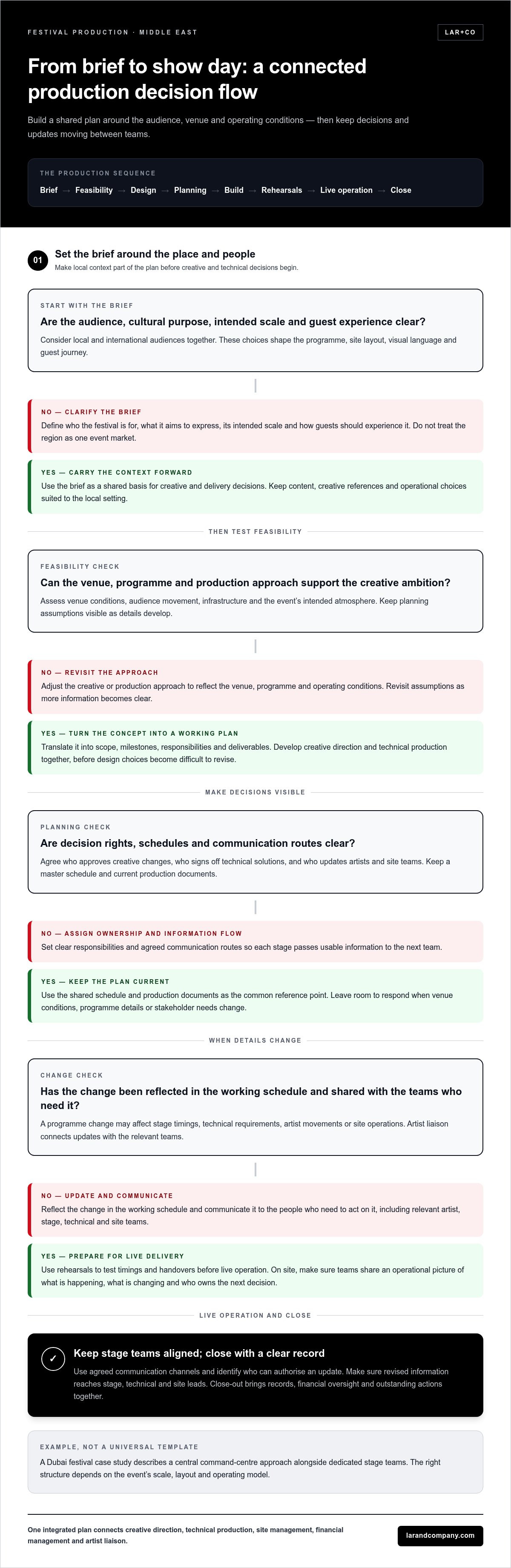
A festival moves through a connected sequence: brief, feasibility, design, planning, build, rehearsals, live operation and close. Each stage turns decisions into information the next team can use. For music festival production in the Middle East, that sequence needs to adapt as venue conditions, programme details and stakeholder needs become clearer.
An integrated festival production plan is the shared sequence of decisions, responsibilities and deliverables that takes a creative brief from concept to close. It gives stakeholders a common reference point. Make decision rights clear: who approves creative changes, who signs off technical solutions, and who updates artists and site teams. A master schedule, current production documents and agreed communication routes reduce ambiguity while leaving room to respond when plans change.
From creative brief to production-ready plan
Translate the concept into scope, milestones, responsibilities and deliverables. Feasibility work tests whether the creative ambition can be supported by the venue, programme and production approach. Develop creative direction and technical production together, before design choices become difficult to revise. For a broader view of the cultural context informing event planning, the Middle East Institute Arts & Culture Center offers a useful reference point.
Keep planning assumptions visible and revisit them as details develop. A programme change may affect stage timings, technical requirements, artist movements or site operations. Artist liaison connects those updates with the relevant teams, so a performance change is reflected in the working schedule and communicated to the people who need to act on it. Live-event technical production relies on this flow between the show plan and delivery teams.
Keeping stages and teams aligned during live delivery
On site, each stage needs defined responsibilities and a shared operational picture: what is happening, what is changing and who owns the next decision. A Dubai festival case study describes a central command-centre approach alongside dedicated stage teams. It is a useful reference, not a universal template. The right structure depends on the event’s scale, layout and operating model.
Use agreed communication channels, identify who can authorise an update, and make sure revised information reaches stage, technical and site leads. Rehearsals provide an opportunity to test timings and handovers before live operation. After the event, close-out brings records, financial oversight and outstanding actions together, giving stakeholders a clear account of delivery.
Lar&Co brings show production, technical production, site management, financial management and artist liaison into complex live projects. Explore Lar&Co’s production work to see how production planning supports delivery across festivals, tours and cultural events.
Build a Distinctive Festival Experience Without Losing Production Clarity
A festival identity should work across the whole site, not only on the main stage. Creative direction can connect stage design, colour, signage and audience areas, while each element still serves a clear purpose. The production brief needs to turn that identity into practical decisions about space, access and delivery.
There are two useful approaches to stage identity. A single visual theme creates cohesion and can make the festival immediately recognisable, but it may leave different programme areas feeling too similar. Distinct stage identities give each space its own character and help audiences understand the programme, though they need a clear design framework to stop the event feeling fragmented. Choose based on the festival’s concept, programme and site.
Give each stage a clear role in the festival story
Start by defining what each stage is for. Its programme, staging and visual cues should express that role, then connect to the festival’s wider creative language through details such as materials, typography or colour. Coverage of a Saudi festival has described themed stages as part of its identity. This is one possible model, not a template to reproduce. The creative concept still needs to fit the site plan, production brief and technical requirements.
Bring creative direction and production planning together early. A striking stage concept must fit the actual site footprint and work alongside access routes, infrastructure and operational needs. This keeps the visual ambition intact while giving delivery teams a clear basis for decisions. Explore Lar&Co’s creative and production work for examples of creative intent carried into live delivery.
Design the guest journey as part of production planning
Map the experience from arrival to departure. Consider how guests move from entrances to stages, shared spaces and amenities, and how they find their next destination. Programme transitions matter too: overlapping performances, breaks and changes of pace can influence where audiences gather and when they move across the site.
Wayfinding and audience information should support the design, not compete with it. Use a consistent visual language to make routes, stage identities and key areas easy to understand. A mobile guide, site map or clear on-site signage can help guests orient themselves. Choose an approach that suits the audience and venue.
There is no universal festival layout. Shape the guest journey around the site, anticipated movement and the experience the event intends to create. In music festival production in the Middle East, a distinctive identity is strongest when creative choices, audience flow and production decisions reinforce one another.
Plan Middle Eastern Festival Sites Around Real Conditions
A festival site is more than a location. Its layout, existing infrastructure, access routes and temporary-build requirements shape what can be delivered and how people move through the event. For music festival production in the Middle East, consider climate and build conditions in the context of the specific venue and season. Avoid assuming every desert, coastal or urban site presents the same opportunities or constraints.
Good site planning connects audience movement, operational access and production needs in one coordinated layout. That gives teams a more manageable delivery plan and helps identify practical issues before they affect the schedule.
Assess the venue before fixing the production design
Review the site before committing to stage positions or the wider production design. Map existing infrastructure, entry and service routes, audience areas, temporary structures and space for build activity. Consider how deliveries and crews will reach work areas without conflicting with guest routes. Early assessment can expose constraints while there is still room to adjust the design, schedule or site plan.
Conditions vary by project. Assess ground, access, weather exposure and venue operations for the specific location rather than treating them as standard features of a whole region. Local authority, safety and permitting requirements also depend on the event and site. Identify the relevant requirements with the project’s local stakeholders and apply them to that specific plan.
Coordinate operational planning across stages and shared areas
Each stage needs a clear operational relationship with shared spaces, audience routes and site access. Stage teams, site management and central decision-makers should work from current plans and a shared understanding of what is happening across the venue. If one area changes, teams responsible for connected routes or operations need timely information.
Plan audience circulation and operational access together. Routes that work for guests must also accommodate production movement and access needs. Contingency planning should reflect the particular site, programme and operating model. It helps teams prepare for defined scenarios, but cannot guarantee a particular outcome. This is a core consideration in large-scale event management, where connected decisions can affect multiple areas of delivery.
Lar&Co’s site management and production capabilities bring site, technical and show planning into a coordinated approach.
Choose an Integrated Production Approach for a Middle Eastern Music Festival
A festival’s creative, technical and site decisions are interdependent. When responsibilities are fragmented, changes can move slowly between teams, leaving schedules, designs and delivery plans out of step. Integrated oversight gives organisers a coordinated view of decisions, responsibilities and deliverables while keeping each specialist’s role clear.
This matters in music festival production in the Middle East, where a production plan needs to connect the festival concept with the chosen venue, programme and local operating context. Integration does not remove complexity. It makes dependencies visible so teams can respond to them together.
What joined-up show production gives festival organisers
From concept through completion, a coordinated approach links creative direction with technical feasibility and site realities. A change to a stage concept, for example, can affect technical requirements, site planning and the schedule. With joined-up oversight, the relevant teams can assess those effects using the same current information, rather than working from separate assumptions.
Clear responsibility for decisions and approvals helps maintain momentum. So does a shared production schedule linking milestones, deliverables and handovers. It gives organisers a practical way to track how creative ambition is progressing towards live delivery while preserving accountability across the project.
How Lar&Co brings production disciplines together
Lar&Co’s capabilities span show production, technical production, site management and creative direction. Financial management and artist liaison also connect directly to the wider plan. Financial oversight keeps production decisions visible within the project’s financial framework, while artist-facing coordination aligns programme requirements with schedules and delivery teams.
An independent international show-production practice, Lar&Co has more than 20 years of experience in complex live entertainment projects across festivals, tours and cultural events. Its offices in London and Los Angeles support an international perspective without assuming that one production model suits every market. Explore Lar&Co’s international live entertainment projects to learn more about its work.
For a festival with multiple creative, technical and site considerations, a project-specific production approach can bring those disciplines into one clear plan.
Bring Your Festival Vision into Focus
Successful music festival production in the Middle East begins with a brief shaped around the specific audience, venue and purpose. From there, creative choices, site conditions and delivery responsibilities need to work as one plan, from early design through live operation.
That joined-up approach helps organisers build an experience with a clear identity while keeping technical, site and show decisions aligned. It also gives teams a practical framework for managing schedules, changes and artist requirements.
Lar&Co brings more than 20 years of experience in complex live entertainment projects. Its international team works across show production, technical production, site management and creative direction, connecting creative ambition with delivery.
Start shaping your festival’s production approach with a project-specific conversation. Discuss your festival production brief and take the next step towards a distinctive, deliverable event.
Frequently Asked Questions
What does music festival production include?
Music festival production coordinates the creative, technical and operational work needed to deliver an event. It can include creative direction, show production, technical production, site management, financial management and artist liaison. The scope depends on the festival’s brief, venue and programme. For a multi-stage event, production also aligns schedules, responsibilities and shared site information, so decisions made by one team are clear to the others.
How do you plan a music festival in the Middle East?
Start with a brief that defines the audience, purpose, scale and intended experience, then assess feasibility against the venue and programme. A strong plan for music festival production in the Middle East moves through design, scheduling, site planning, build, rehearsals, live operation and close. Whether a project is based in the UK, USA, United Arab Emirates, Saudi Arabia or Qatar, tailor the approach to its stakeholders, location and operating conditions.
What makes festival production in the Middle East different?
The region brings together distinct markets, audiences and venues, so there is no single production template. A festival in Riyadh, Dubai or Doha may have different creative aims, site conditions and stakeholder needs. Cultural references, audience expectations and project-specific requirements should inform the brief early. Establish the relevant local processes for each event rather than assuming requirements are the same across cities or countries.
How are multiple stages coordinated at a music festival?
Coordinate multiple stages through a shared production schedule, defined stage responsibilities and clear communication between stage, technical and site teams. Each stage needs its own programme and operational plan, but teams should also understand how changes affect shared areas, audience movement and event timings. A central coordination structure can help maintain a common operational picture, with the model shaped around the site and festival’s scale.
Can one production team manage creative and technical delivery?
Yes. An integrated production team can connect creative direction with technical production and site management, helping teams develop ideas alongside practical delivery requirements. Show production, financial management and artist liaison can also align with the wider plan. This approach creates a clearer view of responsibilities, schedules and decisions. Lar&Co brings these capabilities together for complex live entertainment projects, adapting its approach to each brief.
What should a festival production brief include?
A useful brief sets out the festival’s purpose, audience, programme, scale and desired guest experience. It should also outline the venue, creative direction, key stakeholders, known site conditions, delivery milestones and decision-making responsibilities. Include budget parameters and artist requirements where available. These details give creative, technical and site teams a shared starting point while leaving room to review assumptions as venue and programme plans develop.
How much does music festival production cost in the Middle East?
There is no single cost for music festival production. The budget depends on the event’s scale, programme, venue, design ambition, technical requirements, site infrastructure and delivery scope. Separate and coordinate these elements in the project budget, then review them as the brief and production plan develop. Lar&Co provides project-based production management and financial oversight, shaped around the specific festival requirements.