Scenic Design for Live Events: Engineering Immersive Global Experiences
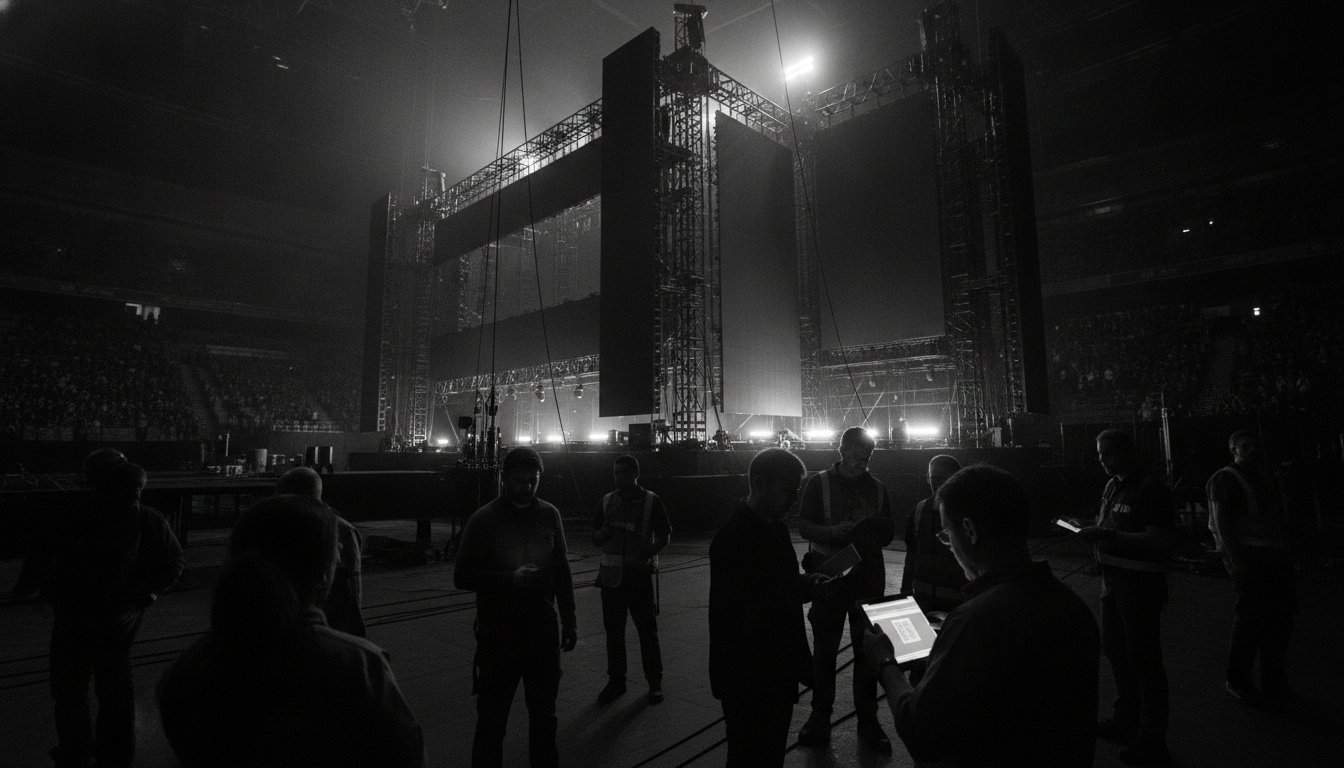
A world-class stage is not a backdrop; it's a precision-engineered environment that dictates the success of a global production. When a creative vision meets the harsh reality of international logistics, the result is often a compromise. Elite scenic design for live events eliminates this friction by treating the stage as a structural architecture rather than a mere visual ornament. It's the difference between a set that looks good on paper and one that performs flawlessly across three continents.
You understand the pressure of maintaining a brand's prestige whilst managing volatile material costs and complex border crossings. It's a high-stakes environment where a single technical failure can overshadow years of planning. This article explores how sophisticated engineering and meticulous financial oversight transform ambitious concepts into tangible, repeatable realities. We will examine the integration of real-time rendering, the necessity of modular construction, and the logistical frameworks Lar&Co uses to deliver a consistent, impactful experience on a global scale.
Key Takeaways
• Redefine scenic design for live events as a structural architecture that bridges the gap between ambitious creative concepts and repeatable global execution.
• Identify the engineering principles required to build tourable sets that maintain visual integrity whilst allowing for rapid assembly across international borders.
• Explore how meticulous site management and venue adaptation prevent technical failures on the world’s most prestigious stages.
• Understand the production workflow that translates high-level creative direction into tangible results through transparent financial oversight.
• Leverage two decades of global expertise to navigate the complexities of high-profile entertainment delivery with absolute composure.
The Evolution of Scenic Design for Modern Live Events
Scenic design has moved beyond the periphery of production. It is now the central nervous system of the live experience. Historically, Scenic design referred to the creation of theatrical scenery; however, in the context of high-profile entertainment, it has evolved into a holistic discipline. It is no longer about filling space behind a performer. It is about the deliberate engineering of a performance environment that commands attention from every angle. Static backdrops have been replaced by responsive, multi-dimensional structures that interact with light, sound, and technology. This transition reflects a fundamental shift in how we perceive live entertainment. We don't just build stages; we create worlds.
From Backdrop to Immersive Environment
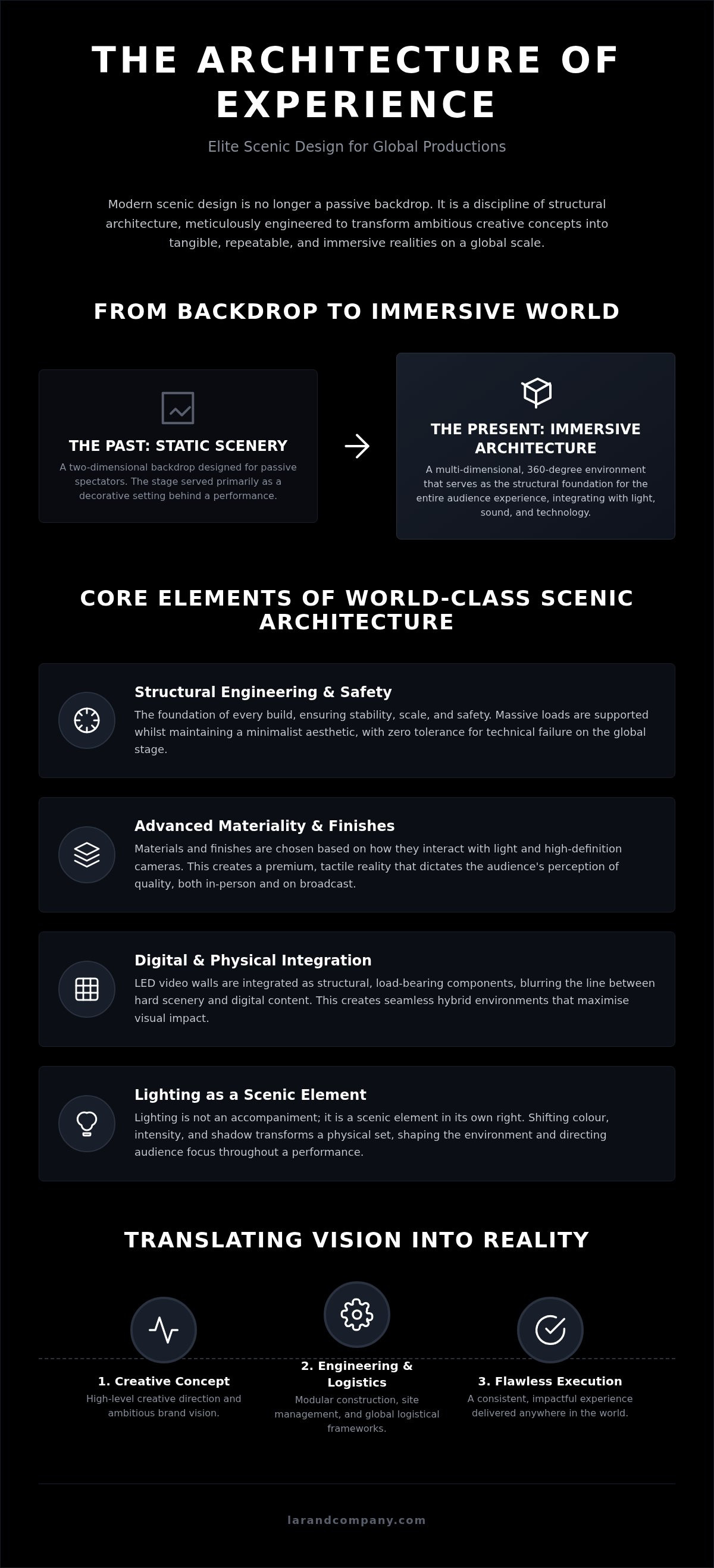
Modern audiences demand an experiential journey. They are no longer content to be passive spectators. In stadium and festival settings, the shift toward 360-degree environments ensures the narrative is inescapable. This requires a transition from two-dimensional thinking to complex, interactive architectures. Whether it's a world tour for a musical legend or a high-end fashion show, the built world must reflect the specific narrative of the show producer. Every beam, texture, and surface is a deliberate choice. These environments must be as impactful for the person in the front row as they are for the thousands watching on screens. At this level, scenic design for live events serves as the structural foundation for the entire audience experience, ensuring that the physical space enhances rather than distracts from the performance.
The Strategic Value of Visual Storytelling
Visual storytelling is a strategic asset for any high-profile brand or artist. Every element of the stage build communicates specific values and identity. Scale and perspective are used to influence audience behaviour directly; a massive, looming structure can evoke a sense of awe, whilst intimate, textured finishes foster a deeper connection. Scenic design is the physical manifestation of creative direction. This physical presence provides the "wow moments" that drive global social media engagement and define an event's legacy. When scenic design for live events is executed with precision, it creates a repeatable, reliable visual language that can be transported across the globe. It's about translating abstract creative vision into a tangible reality that maintains its integrity under the scrutiny of a world stage. This level of execution requires a partner who understands the psychology of the audience and the technical demands of the site.
Core Elements of World-Class Scenic Architecture
Elite scenic design for live events relies on the synthesis of structural engineering and creative vision. It's about more than appearance; it's about stability, scale, and safety. Every stage build begins with a foundation of rigorous engineering. This supports massive loads whilst maintaining a minimalist aesthetic. This technical discipline ensures that the "wow" moments don't just look spectacular but are executed with absolute reliability. At this level of production, there is no room for technical failure on the global stage.
The choice of materials is equally critical. Finishes must be selected based on how they respond to light and high-definition camera lenses. Whether it's the brushed metal of a luxury fashion runway or the matte textures required for a televised award show, materiality dictates the audience's perception of quality. Understanding the creative work of scenic design requires a deep knowledge of how physical surfaces interact with the digital and atmospheric layers of a production. It's about creating a tactile reality that feels as premium in person as it does on a broadcast.
Integrating Physical Structures and Digital Surfaces
Modern scenic architecture often blurs the line between "hard" scenic elements and "soft" digital content. LED video walls are no longer just screens hung behind a performer. They are now integrated as structural components that provide both light and depth. By using LED panels as load-bearing or architectural features, we create a hybrid environment that feels seamless. This approach requires precise planning to ensure that sightlines are maintained for every attendee, regardless of their position in the venue. The goal is to maximise visual impact without compromising the structural narrative of the show.
Lighting and Atmospheric Design as Scenic Elements
Lighting transforms a physical set throughout a performance. It's not just an accompaniment; it's a scenic element in its own right. By shifting colours, intensities, and angles, a single structure can represent multiple different environments within one show. Kinetic movement adds another layer of sophistication. Automated trusses and rotating stage elements allow the scenic landscape to change in real-time, keeping the audience engaged through constant evolution. Atmospheric effects like haze and pyrotechnics provide the necessary depth to make these structures feel three-dimensional. Our approach to technical production ensures that these complex systems work in perfect harmony. You can explore how we balance these elements in our portfolio of international projects.
Navigating Technical Feasibility and Global Logistics
A successful creative concept is only as strong as its logistical execution. In high-profile entertainment, scenic design for live events must account for the friction of global movement. A set that looks impeccable in a London studio must perform equally well in Tokyo or New York. This requires a technical direction that bridges the gap between aspirational art and physical reality. We manage this by prioritising feasibility from the initial sketch, ensuring that bespoke components are not only visually stunning but also legally and logistically compliant for international transit.
Technical feasibility involves more than structural integrity. It requires a deep understanding of international customs, freight timelines, and material volatility. With steel prices projected to rise by 15-35% in 2026, procurement and financial oversight are vital. We ensure that every scenic element is designed with its entire global journey in mind. This foresight prevents budget overruns and ensures that the creative vision remains intact, regardless of the destination. It's about moving complex structures across borders with absolute composure.
Engineering for Portability and Repeatable Success
Repeatability is the hallmark of elite touring. We engineer for "truckability," a discipline focused on maximising space and minimising weight. Every scenic element is broken down into modular units that fit standard shipping containers or trailers. This modularity allows for rapid assembly and disassembly, which is a necessity for tight tour schedules. The role of technical production for live events is critical here. It provides the framework for scenic elements to integrate seamlessly with lighting and audio systems, ensuring a consistent audience experience at every stop on a world tour.
Managing Venue Constraints and Site Specifics
No two venues are identical. A design created for an outdoor stadium must be adaptable for an indoor arena or a bespoke festival site. Meticulous site surveys are essential. We assess weight-bearing capacities, power availability, and access points long before the first truck arrives. This level of large scale event management ensures that scenic builds are executed safely and efficiently. By adapting the core architecture to local constraints, we maintain the show's visual impact whilst adhering to strict safety standards and local regulations. This meticulous attention to detail is what allows us to deliver flawless experiences in any territory.
The Production Workflow: Translating Vision into Reality
Translating a high-level vision into a physical structure requires a disciplined, multi-stage workflow. It begins with creative consultancy. We work closely with stakeholders to define a visual narrative that is both aspirational and executable. Scenic design for live events at this scale is never just about aesthetics; it is a matter of precision engineering. This involves testing and prototyping complex scenic movements long before they reach the stage. Prototyping ensures that every kinetic element, from rotating platforms to automated trusses, performs with absolute reliability under the pressure of a live show. This phase is essential for identifying technical limitations early, allowing for adjustments that preserve the creative intent whilst ensuring safety.
Creative Consultancy and Concept Development
We collaborate with artists and brands to refine the core visual narrative. Abstract ideas are systematically translated into precise 3D models and technical drawings. This rigorous process ensures the creative direction for live shows remains the focal point throughout the entire build. By visualising the set in a digital environment first, we can simulate lighting interactions and audience sightlines. This digital-first approach identifies potential structural issues before fabrication begins, saving significant time and resources. It allows for a seamless transition from a creative dream to a tangible, structural reality that can be replicated across international venues.
Financial Oversight and Procurement Strategy
Managing multi-million pound budgets requires absolute transparency and composure. Meticulous production financial management is non-negotiable for high-stakes projects. We employ a rigorous procurement strategy to source world-class materials and specialist talent whilst maintaining cost-efficiency. This involves vetting vendors across our global network to ensure they meet our exacting standards for quality and reliability. We mitigate financial risk through constant budget reporting and proactive planning, accounting for material cost volatility well in advance. This fiscal discipline allows stakeholders to focus on the performance, confident that the project is being delivered on time and within the agreed financial framework. If you are ready to move your vision from concept to execution, speak with our production experts.
Delivering Elite Scenic Design with Lar&Co
Lar&Co operates as the quiet power behind the most significant moments in global entertainment. With over 20 years of experience, we have established ourselves as an international show production practice capable of handling the most complex challenges with absolute composure. Our approach to scenic design for live events is defined by the gravity of our portfolio, which spans from iconic musical legends to the world's most prestigious fashion houses. We don't just build stages; we engineer the physical environments that define high-profile cultural experiences. This legacy of excellence is built on a foundation of technical direction and financial oversight that ensures every project is as robust as it is visual.
A Global Approach to Show Production
Our presence in major international hubs allows us to manage projects with seamless efficiency. With offices in London and Los Angeles, we provide a strategic bridge for clients operating across the UK, USA, UAE, Saudi Arabia, and Qatar. This global reach is essential for navigating the logistical nuances of different territories, from local safety regulations to complex customs requirements. We frequently integrate our bespoke designs into broader stadium tour management services, ensuring that every venue on a global circuit receives the same tier of visual excellence. Whether it's a large-scale civic event or an intimate luxury showcase, our team remains unflappable under the pressure of rare and significant challenges. We operate with a cosmopolitan perspective, understanding the cultural nuances required for international diplomacy and high-end brand activations.
Meticulous Attention to Detail at Every Scale
The hallmark of our work is a relentless commitment to precision. We leverage a global team of world-class talent to ensure that every texture, joint, and digital surface meets our exacting standards. This meticulous attention to detail is what allows us to translate an abstract vision into a tangible and impactful live experience. We understand that at the highest level of entertainment, there is no room for compromise. Our role is to provide the reliable execution required to protect your brand's prestige on the world stage. This focus on results has allowed us to deliver a rhythmic drumbeat of success across multiple elite sectors. We invite you to contact the Lar&Co team to discuss how we can bring your next high-profile project to life with absolute technical certainty and professional composure.
Engineering the Future of Global Entertainment
Exceptional scenic design for live events is the result of a seamless transition from abstract creative direction to tangible, repeatable architecture. It requires a partner who understands that visual impact is inseparable from logistical feasibility. By prioritising structural engineering and meticulous financial oversight, we ensure that the most ambitious concepts remain stable and impactful on a world stage. The ability to navigate international customs whilst maintaining a brand's prestige is what separates elite production from mere decoration.
Lar&Co brings 20+ years of international show production expertise to every project. With offices in London and Los Angeles, we provide the global connectivity required to execute high-stakes events with absolute composure. Our team specialises in multi-million pound production management, acting as the quiet power behind the scenes for the world's most iconic performances. We invite you to partner with Lar&Co for world-class scenic design and show production. Let's translate your vision into a flawless reality that resonates across borders.
Frequently Asked Questions
What is the difference between stage design and scenic design?
Stage design typically refers to the functional layout and technical requirements of the performance area. In contrast, scenic design for live events involves the holistic creation of the entire built environment, including textures, depth, and atmosphere. It's the structural architecture that defines the audience's emotional journey. Whilst stage design ensures the performer has space to move, scenic design transforms the venue into a cohesive, narrative world that reflects the brand's identity.
How much does scenic design for a live event cost?
Costs are determined by the scale, complexity, and materials required for the build. Factors such as international freight, technical automation, and material volatility, including the projected 15 to 35 percent rise in steel prices in 2026, influence the final budget. Every project requires a bespoke financial framework. We prioritise transparent reporting to ensure that multi-million pound investments deliver maximum visual impact without unforeseen overruns or hidden logistical expenses.
How do you ensure a complex scenic design is safe for public events?
Safety is ensured through rigorous structural engineering and adherence to international building codes. Every complex scenic element undergoes load-bearing analysis and prototyping before fabrication. During the build, meticulous site management ensures that all structures are secured according to local health and safety regulations. This technical discipline protects both the performers and the public, providing absolute reliability on a global stage where there is no room for technical failure.
Can scenic design be adapted for different venue sizes on a world tour?
We engineer scenic elements with modularity in mind to ensure they fit diverse venue constraints. This "tourable" approach allows a stadium-scale design to be reconfigured for smaller arenas or bespoke festival sites without losing its visual core. By surveying venues in advance, we adapt the physical structures to local weight limits and sightlines. This flexibility is essential for maintaining consistency across a world tour, ensuring the audience experience remains identical regardless of venue.
What role does technology play in modern scenic design for live events?
Technology acts as a bridge between physical structures and immersive content. Modern scenic design for live events incorporates LED video walls as load-bearing components and uses projection mapping to change textures in real-time. Software like Cinema 4D 2026.3 and AutoCAD 2026 allows for precise 3D modelling and simulation. These tools enable us to test lighting interactions and kinetic movements in a digital environment before the physical build begins, reducing risk and improving efficiency.
How long does the scenic design and build process typically take?
The timeline depends on the project's scope, but high-profile builds typically require several months of planning. This includes the initial creative consultancy, technical drawing, and prototyping phases. Fabrication and logistics must also be factored in, especially when moving bespoke components across international borders. A structured workflow ensures that even the most complex interactive architectures are delivered on time for the first performance, regardless of the complexity of the global logistical chain.
What is the most important factor when choosing a scenic design partner?
The most important factor is the partner's ability to translate a creative vision into a tangible, reliable reality. You should look for a practice with a proven portfolio of high-stakes international projects and a global team of world-class talent. A partner must offer more than aesthetic design; they must provide the technical direction and financial oversight required to manage complex logistics and multi-million pound budgets with absolute composure and professional prestige.
How does scenic design impact the financial management of a live show?
Scenic design is a primary driver of the production budget, impacting procurement, freight, and labour costs. Effective financial management involves mitigating risks associated with material price increases and international customs duties. By integrating financial oversight into the design process, we ensure that every pound is spent effectively. This strategic approach prevents budget creep whilst maintaining the high tier of quality expected for global entertainment, providing stakeholders with total transparency throughout the build.