Technical Production for Brand Experiences, From Design to Delivery
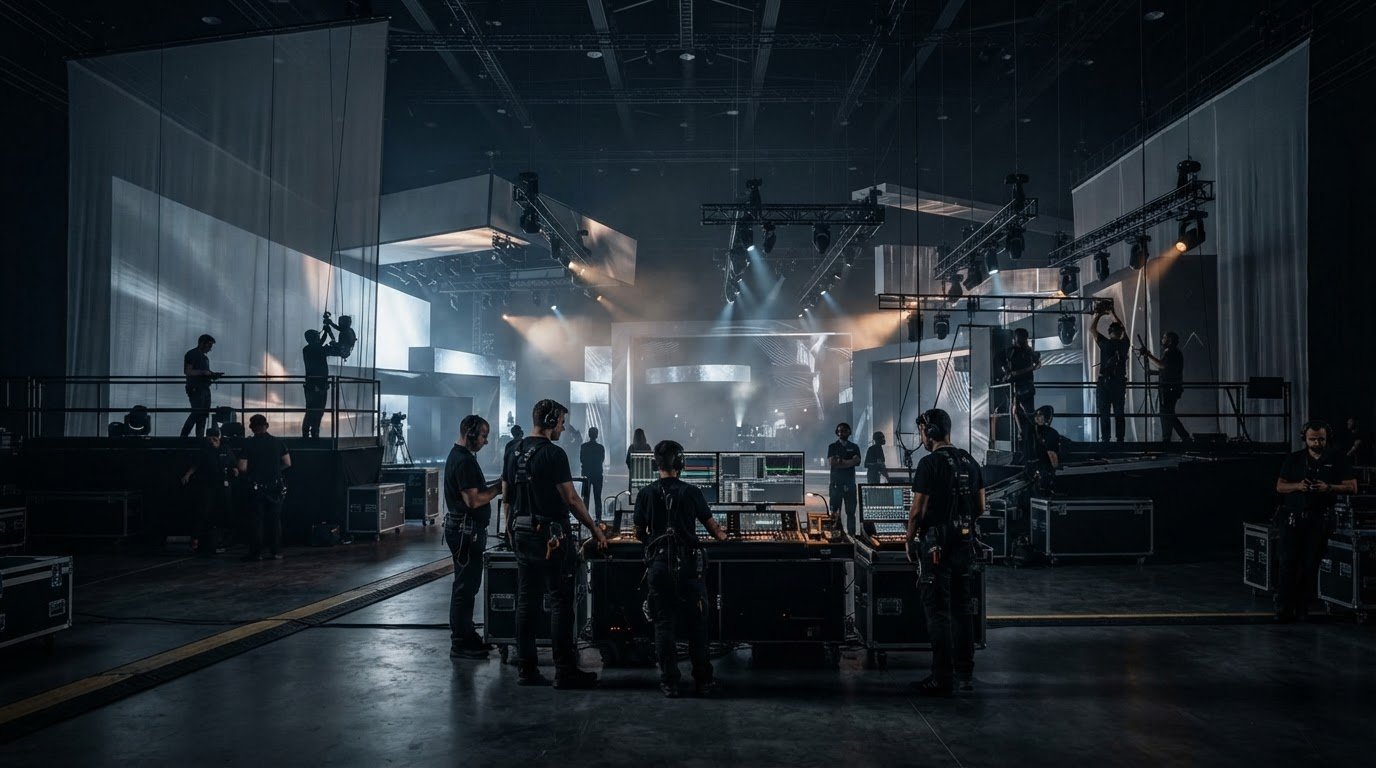
The technology should disappear into the experience. Technical production for brand experiences brings lighting, audiovisual systems, interactive elements and physical environments together, so audiences engage with the brand rather than the equipment behind it. The result might be a product launch, temporary installation or immersive activation built around a clear story.
A striking setting matters, but it also has to work. Visitors need to move through it naturally, content must be visible and audible, and every technical choice should support the intended atmosphere. When these elements are planned together, the experience feels cohesive rather than assembled from separate parts.
This article explains how technical design connects creative ideas with practical delivery, and how budgets, brand identity and technology shape the final environment. It covers choosing interactive features, planning technical infrastructure and coordinating scenic and visual elements. The aim is to make technology purposeful: engaging enough to create a memorable encounter, yet integrated enough to keep the brand at the centre.
Key Takeaways
• Shape an activation around the audience journey, with layouts, scenic elements and displays working as one environment.
• Use technical design to translate creative intent into an installation that is practical to build, operate and experience.
• Set the scope and budget around the venue, build complexity, technical requirements and installation logistics.
• Make every visual and technical choice reinforce the brand identity, rather than compete with its story.
• Bring in Lar&Co when a brand experience needs coordinated creative direction, technical production and site management through delivery.
Experiential campaign formats and brand activations
Brand activations range from temporary product displays to interactive games and digital installations. Production connects the physical environment, audience participation and brand message.
Activation design and production workflows
An activation workflow turns a concept into a buildable environment, then coordinates fabrication, installation and operation. Scenic structures, graphics, lighting and audience movement all need to work together on site.
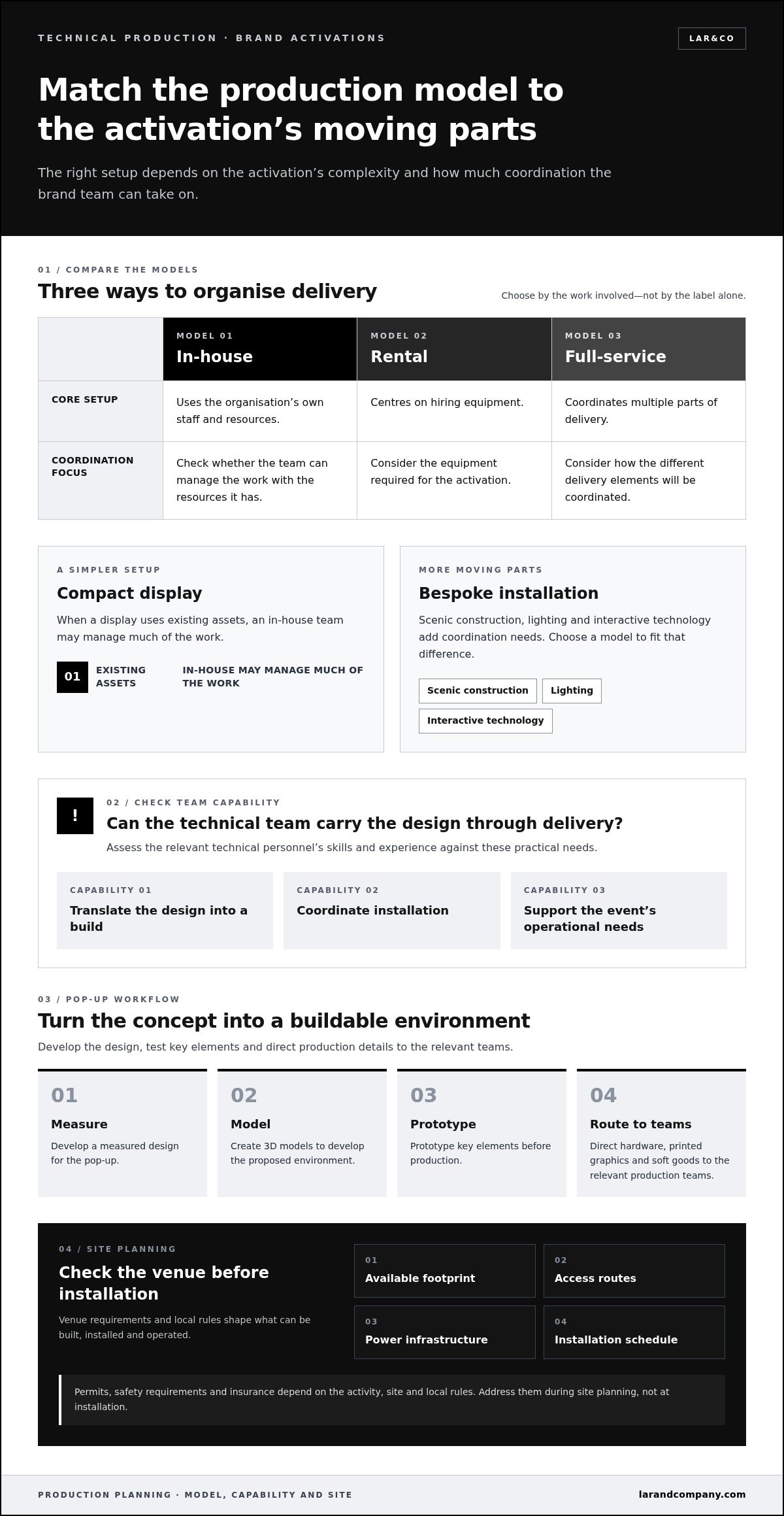
For a pop-up, teams can develop a measured design, create 3D models, prototype key elements and route hardware, printed graphics and soft goods to the relevant production teams. Aluminium is commonly used for pop-up hardware because it combines strength with low weight. A product demonstration zone, for example, needs enough space for visitors to gather without blocking the route through the activation.
Interactive elements can make the audience part of the experience. A branded game might combine a screen, physical controls and a clearly planned queue, while a digital installation could use projection to turn a wall into a changing campaign backdrop. Give each feature a defined role, such as encouraging participation, building awareness or prompting sharing.
Production models and vendor choice
Production models set out who supplies and coordinates the people, equipment and delivery work. The right model depends on the activation’s complexity and how much coordination the brand team can take on.
In-house production uses an organisation’s own staff and resources. Rental centres on hiring equipment, while full-service production coordinates multiple parts of delivery. Assess the relevant technical personnel’s skills and experience, as the U.S. Environmental Protection Agency advises. Consider whether the team can translate the design into a build, coordinate installation and support the event’s operational needs.
For a compact display using existing assets, an in-house team may manage much of the work. A bespoke installation involving scenic construction, lighting and interactive technology has more moving parts. Choose the production model to fit that difference, rather than relying on a label alone.
Venue rules, permits and insurance
Venue requirements and local rules shape what can be built, installed and operated. A design that works at one site may need adapting for another.
For a pop-up in a shopping centre, public square or exhibition hall, the available footprint, access routes, power infrastructure and installation schedule all affect the production plan. Permits, safety requirements and insurance depend on the activity, site and local rules, so address them during site planning, not at installation. A structure, public-facing game and projection setup each bring different operational considerations.
Map site constraints against the design, then coordinate the layout, setup sequence and safety checks with the venue and relevant local processes. This can surface conflicts early, such as a display obstructing audience flow or equipment exceeding the space’s practical capacity.
Technical services and live-event risks
Technical services bring an activation’s scenic, lighting and audiovisual elements into operation. Their coordination matters because a failure in one element can interrupt the audience experience.
A brand launch may need scenic construction, lighting, screens, sound and technical infrastructure for presentations or content. Common risks include equipment faults, unclear visitor routes, late installation and interactive features that are hard to use. Mitigate them by testing the complete setup before opening, confirming the running order, keeping routes clear and briefing the team on how the experience should operate.
For an interactive game, test the controls and screen content together, then rehearse the visitor flow from entry to exit. For a campaign across several locations, consistent layouts and standardised technical setups can create a recognisable experience while allowing adjustments for each venue.
Technical design as a bridge between creativity and engineering
Technical design connects a creative idea to the physical decisions that make an environment usable. It gives the agency, designers and production team a shared path from brand story to execution.
Start with the audience and message, then map how visitors encounter each part of the space. A product launch could guide visitors from an entrance feature to a demonstration and then to a place for conversation. Set and exhibit designers develop visual and tactile spaces for displays, according to the U.S. Bureau of Labor Statistics. Their plans translate atmosphere into dimensions, materials and practical visitor routes.
Drawings and 3D models make a proposed environment easier to assess before construction. They can show how scenic elements relate to screens, lighting positions and the audience’s view. A design review can then identify practical conflicts, such as a screen hidden behind a display or a feature that narrows the route. Resolving those details early helps the finished space retain the intention of the original concept.
LED screens should serve the brand story, not simply fill a wall. Position, scale and content need to work together: a close-up product film may suit a focused demonstration, while a sequence of campaign visuals can shape a larger environment. Plan content around viewing distance, sightlines and transitions between scenes. This connects the screen’s technical role to what visitors should notice and understand.
Creative participation gives visitors a role in the environment. A making station might invite people to assemble or customise an item linked to the campaign. Its design needs to account for the materials, work surface and finished object, as well as how each visitor approaches and leaves the activity. That makes interaction part of the experience rather than an isolated feature.
Technical production for brand experiences brings creative direction and practical engineering into the same design conversation. A projection-led environment needs content mapped to its surfaces; an interactive display needs physical controls positioned for comfortable use. Every choice affects the others, from scenic proportions to power and equipment placement. Coordinated decisions keep the brand story clear throughout the visitor journey.
Examples of designed live environments can help teams see how visual concepts translate into delivered spaces. Use them to clarify the desired atmosphere, audience interaction and level of technical integration before fixing design decisions.
Technical planning and budgeting process
Planning connects the creative vision to the resources, schedule and decisions needed for delivery. For an immersive product launch, the budget needs to cover the environment, audience engagement and live event operation.
Begin by defining the experience’s purpose and essential components. A trade show installation might need a branded structure, product demonstration area, screen content, lighting and visitor support. Separate essentials from optional enhancements. This helps protect the central idea if venue constraints or production decisions require changes.
Build the budget from the project scope, not a single visual reference. A large scenic feature can affect fabrication, transport, installation and removal. An interactive display may also require content production, technical integration and testing. List each element and its dependencies, then assess how changes affect the rest. This gives stakeholders a clearer basis for comparing design choices.
Venue and format shape the production plan. A trade show stand must fit its allocated footprint and meet the event’s access, installation and operating arrangements. A public-facing activation may need a different audience layout and technical setup. Map the venue, access route, power needs and installation sequence against the design before finalising the production scope.
Link design approvals to fabrication and technical preparation in the schedule. For a projection-led environment, content format must align with the chosen surfaces and playback system. If screen dimensions change, the visual composition may need revising. Identify decisions that affect other work and resolve them early to avoid last-minute redesign or installation conflicts.
Budget decisions should account for operation as well as the build. A product demonstration needs a workable visitor route, staff positions and clear access to the product. A participatory activity may require replenishable materials and a plan to reset the space. These operational details affect the design and resources needed throughout the event.
For campaigns across different locations, distinguish elements that must stay consistent from those that can adapt. A standard scenic design can preserve the brand’s visual identity, while dimensions, access arrangements and technical infrastructure respond to each venue. This clarifies where repeatable production supports efficiency and where local adjustments are essential.
A well-structured plan links each design choice to its delivery consequences. Connecting the vision to scope, venue, schedule and operation helps teams make deliberate trade-offs and keep the live experience coherent.
Aligning production with brand identity
Production choices shape how audiences perceive a brand in person. A product launch for a precision-engineered watch might use controlled lighting, clean display lines and close-up product visuals. A playful campaign could invite movement, bold colour and hands-on participation. The physical environment should express the same character as the brand’s other communications.
Start with the brand’s objectives, audience and identity before selecting technical elements. Identify the qualities visitors should recognise, such as craft, innovation or warmth. Translate them into practical decisions: surface finishes, lighting colour, graphic scale, sound and visitor interaction. This gives designers and production teams a shared reference beyond a mood board.
Visual consistency depends on how every asset works together. For a launch using printed graphics and digital screens, compare the approved artwork across both formats. Colour, typography, image treatment and message hierarchy should remain recognisable when dimensions change. Digital printing can help physical event assets match their intended renderings, while careful proofing catches differences before installation.
The venue can affect execution without changing the brand’s core identity. A campaign moving between a city-centre space and a trade show may need different layouts, sightlines or display dimensions. Keep key visual features and messages consistent, while adapting structures and audience routes to each site. This balances recognisable brand expression with practical logistics.
Design around the audience’s actual journey. At a product demonstration, place the product where visitors can see it clearly and make supporting information easy to approach. At an interactive campaign station, use graphics and instructions that explain participation at a glance. These choices connect brand presentation with visitor behaviour instead of treating visual design as decoration.
Campaigns also need consistency across supporting materials. Check entrance signage, staff-facing information, screen content and take-away materials against the same approved visual system. A mismatch, such as different product imagery on a display and screen, can weaken recognition. A shared review process helps teams catch differences before the event opens.
Communication between the brand, creative team and production team keeps the intended story intact. Discuss the audience, objectives and identity before finalising equipment or construction choices. When a material, layout or technical element changes, explain the effect on the visual result and visitor experience. Clear decisions help resolve practical constraints without losing the campaign’s defining qualities.
Brand alignment is tested in execution, not just concept artwork. Review the built environment from the audience’s viewpoint: check visibility, colour, message placement and transitions between physical and digital elements. A final walkthrough can reveal whether the experience communicates the same identity from the entrance to its main interaction.
Technology integration for brand experiences
Technology works best when it advances the experience’s message rather than competes with it. In experiential marketing, a screen, projection or interactive element should give visitors a reason to engage with the brand. A product demonstration might use a display to explain a feature while keeping the physical product in focus.
Start with the audience action the concept needs to support. If visitors should explore a product, place demonstration content beside it. If the aim is sharing, create a clear visual moment that makes the campaign easy to recognise in social media coverage. Define the purpose before equipment choices shape the experience.
Projection can transform a surface without adding another physical display. A mapped visual sequence might introduce a product, show its details and close with the campaign message. Test content on the actual surface and from visitor viewpoints, because scale and sightlines affect visibility. Projection should support the environment’s story, not obscure other elements.
Screen content needs production planning as well as creative direction. Set the screen dimensions, playback format and content sequence together. A product film designed for a wide LED screen, for example, may need a different composition on a vertical display. Checking content in its intended format helps preserve legibility and coherent transitions.
Some experiences use several technologies at once. A product demonstration might combine televisions with iPads for registration and marketing opt-ins. Give each device a defined position and role, so visitors can follow the experience without searching for the next action. Keep the main message visible and supporting interactions direct.
For a multi-camera installation, arrays may use 20-50+ synchronised cameras. One described setup captures participants from 50 angles simultaneously. Such a system can create a distinctive visual output, but its concept must account for camera placement, participant positioning and the intended result. Technical planning should connect these elements before visitors enter the space.
Technology integration depends on how the elements operate together. Rehearse the complete sequence: trigger the content, check the screen or projection, test interactive controls, then observe the visitor route. For a launch presentation, this can reveal whether a transition interrupts the speaker or draws attention away from the product. Technical production for brand experiences works best when every system serves the same narrative.
For an experience combining screens, projection and live content, Lar&Co can coordinate the technical production and delivery.
Lar&Co: Show Production
Lar&Co brings Show Production and Technical Production to brand experiences, translating creative intent into a coordinated live environment. Its Creative Direction shapes the experience, and Site Management supports delivery at the venue.
Turn to Lar&Co when a launch, activation or live event needs these elements to work as one. Aligning the concept, technical plan and site delivery helps keep the audience experience coherent from preparation through operation.
To discuss your brand experience, contact Lar&Co.
Shape the next experience
The next decision is not which technology to add. Decide what the audience should feel, understand or do, and which moment should stay with them afterwards. Set that intention before committing to a production direction.
For a focused starting brief, define the audience, central interaction, desired environment and practical constraints. Then identify who owns decisions across creative development, technical planning and on-site delivery. This connects ambition to execution while leaving room to refine the details as the concept develops.
Lar&Co brings Show Production, Technical Production and Site Management to projects requiring coordinated delivery. If you are planning technical production for brand experiences, discuss the idea, audience and delivery context with Lar&Co to establish a clear direction.
Share your production brief with Lar&Co and take the next step towards an experience with purpose.
Frequently Asked Questions
What do immersive brand experiences look like?
Immersive brand experiences give visitors an active role in a branded setting. A fragrance launch might invite guests to explore scent notes through changing light, sound and tactile displays before sampling the product. A sports activation could let visitors test a skill and receive a personalised result. The format may be intimate or large-scale; what defines it is the connection between the brand message and what people do.
What does technical production for brand experiences include?
Technical production for brand experiences coordinates the systems and physical elements needed to deliver an event. These may include staging, lighting, audiovisual equipment, screens, projection, technical infrastructure and interactive features. A presentation-led launch needs reliable playback and sound, while an interactive installation also needs its displays and visitor controls to work together. The scope depends on the creative concept, venue and audience experience.
What are the main stages of planning technical production for a brand experience?
The main stages are defining the objective, shaping the concept, assessing the venue, setting the technical scope, coordinating delivery, testing and reviewing the event. Each stage informs the next: a venue survey, for example, may change equipment placement. For a programme across the UK, US, United Arab Emirates, Saudi Arabia and Qatar, assess each location’s venue, audience and delivery context separately.
How much does production for a brand experience cost in the United States?
There is no single price for a brand experience in the United States. Cost depends on the project and is provided after a quote request. Factors include design, physical build, technical systems, content requirements, venue, installation and operation. A repeatable display using existing assets has a different scope from a bespoke environment with interactive technology. Defining the essential audience experience helps clarify the project scope and resulting quote.
What factors affect the budget for experiential event production?
Budget depends on the build, technology, venue, schedule, location and how the experience will operate. A custom scenic environment has different fabrication and installation needs from a simple product display. Multiple venues add transport and adaptation requirements, while interactive features may need dedicated content and integration. Staffing, setup access and event duration also affect scope. Prioritise the elements that carry the brand message before refining optional features.
What technology trends are shaping brand experience production, such as projection mapping, AR, and interactive displays?
Current approaches include projection mapping, augmented reality, virtual reality and interactive screens, each offering a different way to connect content with a physical setting. Projection can transform an architectural surface; AR can add digital content to a visitor’s view; an interactive display can guide product exploration. Choose based on the audience action and message, not novelty alone. Plan content, sightlines and operation together so technology supports the experience instead of distracting from it.